

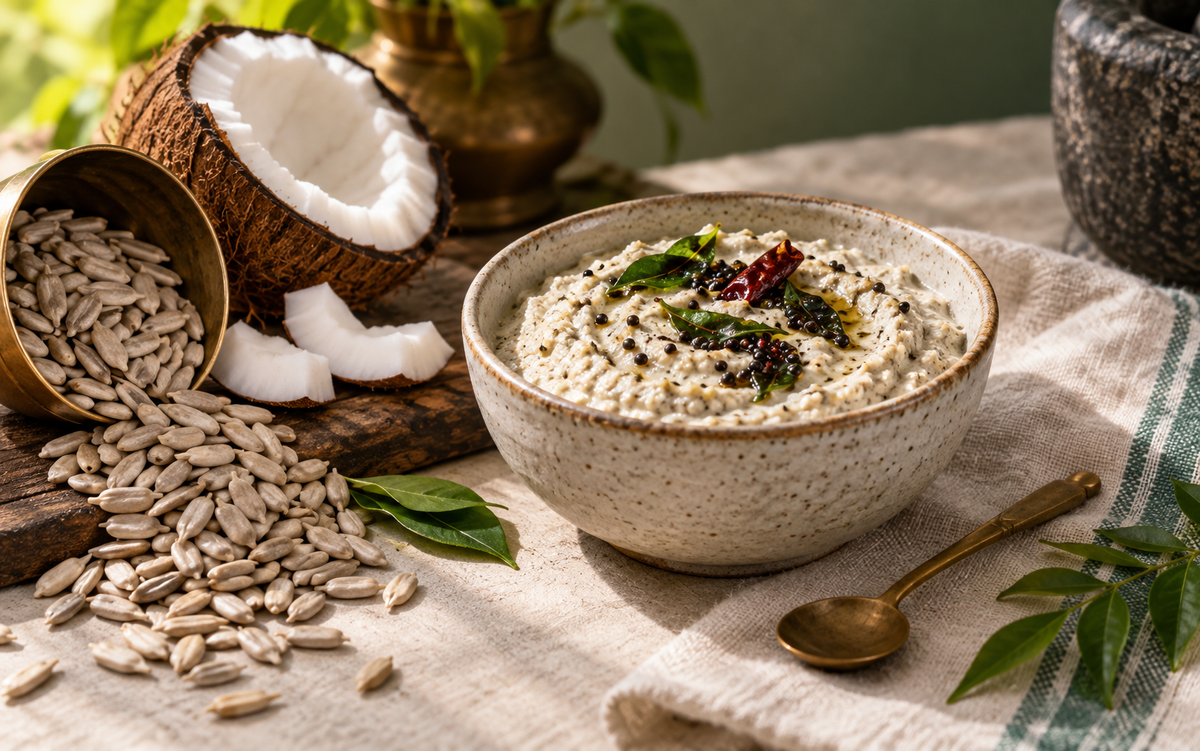
Sunflower Seed Coconut Chutney is an easy Indian-style sunflower seed kernels recipe made with 1/3 cup sunflower seed kernels. Sunflower kernels add body to coconut chutney while keeping the flavour milder than peanuts. This version is written for a normal home kitchen: exact quantities, familiar utensils and a clear order of work.
Sunflower Seed Kernels is mild, nutty sunflower seed kernels ready for roasting, grinding and everyday cooking. In this recipe, The chutney is creamy and gently nutty, with ginger and curry leaf adding brightness. You can review the current ingredient and pack directions on the Sendriya Life Sunflower Seed Kernels product page.
Why this sunflower seed chutney recipe works
The method uses a measured amount of the featured ingredient and surrounds it with familiar Indian flavours. That matters because herbs, flowers, seeds and leaf powders behave differently from ordinary masala: careful timing preserves aroma, controlled heat prevents bitterness, and a final sour or fresh element keeps the finished dish balanced.
The chutney is creamy and gently nutty, with ginger and curry leaf adding brightness. The recipe also uses ordinary pantry measurements, so it is easy to repeat. On the first attempt, follow the quantities exactly; make only one change at a time on later batches. That is the simplest way to learn the ingredient rather than hiding it under excess spice or sweetness.
Sunflower Seed Coconut Chutney at a glance
- Prep time: 10 minutes
- Cook time: 7 minutes
- Total time: 17 minutes
- Makes: 1 cup
- Cuisine: Indian
Ingredients
- 1/3 cup sunflower seed kernels
- 1/2 cup grated coconut
- 1 small green chilli
- 1/2 inch ginger
- 1 teaspoon lemon juice
- 1/2 teaspoon salt
- 1/2 cup water
- 1 teaspoon oil
- 1/2 teaspoon mustard seeds
- 6 curry leaves
How to make Sunflower Seed Coconut Chutney
- Dry-roast sunflower kernels on low heat until lightly fragrant; cool.
- Blend with coconut, chilli, ginger, lemon, salt and water.
- Adjust to a spoonable consistency.
- Temper mustard and curry leaves in oil and pour over the chutney.
Nani’s kitchen notes
- Roast on low heat because seeds colour quickly.
- Cool before blending to protect the coconut texture.
- Add lemon after tasting; a little goes a long way.
The small technique details are worth keeping. Measure the featured ingredient with a level spoon, use a clean dry utensil, and taste the finished recipe before deciding it needs more. Stronger is not automatically better; a balanced recipe is one you will genuinely want to make again.
How to serve it
Serve with idli, dosa, paniyaram or vegetable cheela. For the best texture and aroma, serve at the temperature stated in the method and add delicate finishes—lemon, fresh herbs, roasted seeds or tempering—just before the plate reaches the table.
Storage and make-ahead guidance
Refrigerate and use within 24 hours. Always use a clean container, cool cooked food promptly and discard anything that develops an unusual smell, appearance or texture.
One simple variation
Replace coconut with roasted capsicum for a bright savoury variation. Keep the featured sunflower seed kernels quantity unchanged the first time you try the variation so you can judge the other change clearly.
Frequently asked questions
How much sunflower seed kernels is used in this recipe?
This recipe uses 1/3 cup sunflower seed kernels. Keep that measurement consistent on the first attempt, then adjust only for taste and within the directions printed on the product pack.
Can I make Sunflower Seed Coconut Chutney ahead?
Refrigerate and use within 24 hours.
What is an easy variation of this recipe?
Replace coconut with roasted capsicum for a bright savoury variation.
More Sunflower Seed Kernels recipes
Cook with the ingredient used here: Shop Sendriya Life Sunflower Seed Kernels. For more ideas across the pantry, visit The Sendriya Journal.
This recipe provides general food information. Check the product label for ingredients, allergens, pack directions and storage instructions. Individual needs vary.


