

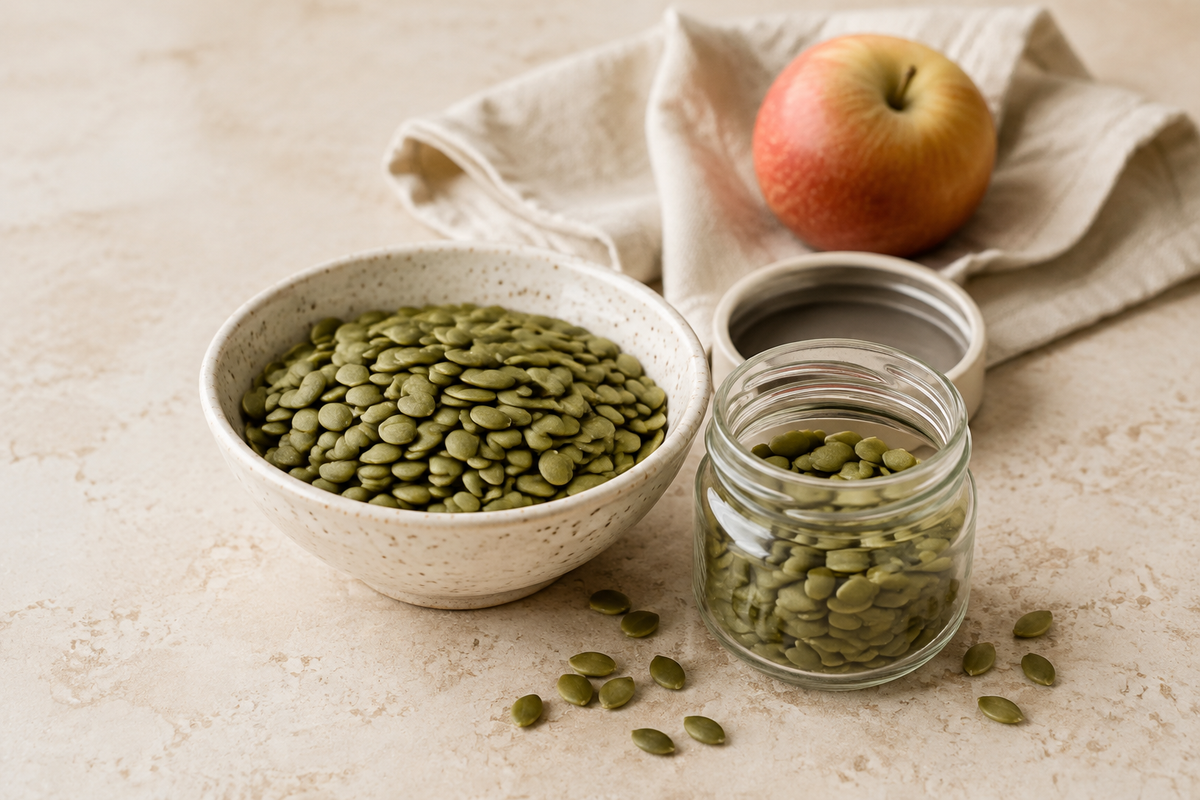
Pumpkin seeds are a compact, shelf-friendly way to add plant protein to a snack. They need no cooking when sold ready to eat, fit easily into a small container and work with both sweet and savoury flavours. They also provide fats and minerals, so a modest portion can make fruit, curd, poha or roasted makhana feel more complete.
Convenient does not mean unlimited. Pumpkin seeds are energy-dense, and they are best used as one component of a varied diet rather than the only protein food on the plate.
How much protein is in pumpkin seeds?
A USDA reference entry for roasted, unsalted pumpkin and squash seed kernels lists approximately 29.8 g protein per 100 g. That works out to about:
- 4.5 g protein in 15 g;
- 6 g protein in 20 g; and
- 9 g protein in 30 g.
These are calculated estimates from a reference food, not a guaranteed value for every packet. Check your product’s nutrition label for its serving size and measured protein value.
Why the format is so convenient
No kitchen required
Ready-to-eat roasted kernels can go directly into a snack box. Unlike dal, beans or eggs, they do not need cooking at the time you eat them.
Easy to portion
A tablespoon measure or small handful is enough. Pre-portioning prevents the common habit of eating continuously from a large pack.
Neutral flavour
Pumpkin seeds are nutty but not strongly flavoured. They pair with lemon and chaat masala, dates and cinnamon, curd and cumin, or simply a piece of fruit.
Portable
Dry seeds travel more easily than many fresh protein foods. Store them in a clean, tightly closed container and protect them from heat—especially in a parked car or direct sun.
Is pumpkin-seed protein “complete”?
The language of complete and incomplete protein can oversimplify plant foods. Pumpkin seeds contain amino acids, including essential amino acids, but not necessarily in the same proportions as human requirements. Lysine is relatively limited compared with some other amino acids.
You do not need to combine every amino acid perfectly in one mouthful. Across the day, rotate seeds with dals, beans, peas, soy foods, dairy, eggs, fish or meat according to your dietary pattern. Grains and pulses, in particular, are familiar complementary foods in Indian meals.
Protein plus what?
A balanced snack usually combines more than one function:
- Protein-containing food: pumpkin seeds, curd, roasted chana, paneer or soy
- Carbohydrate and fibre: fruit, oats, poha, whole-grain roti or vegetables
- Flavour and satisfaction: spices, herbs, lemon or a small amount of jaggery
Pumpkin seeds already contain substantial fat, so you may not need to add much oil, ghee or nut butter to the same snack.
Seven easy plant-protein snack combinations
1. Pumpkin seeds and roasted chana
Mix 1 tablespoon pumpkin seeds with 1/3 cup roasted chana. Add cumin, chilli and a squeeze of lemon just before eating. The chana adds carbohydrate, fibre and more protein while the seeds add richness.
2. Curd, fruit and seeds
Top plain curd with chopped fruit and 1 tablespoon pumpkin seeds. Use cardamom or cinnamon instead of a heavily sweetened granola.
3. Makhana seed mix
Roast makhana with a small amount of ghee or oil, then add pumpkin seeds during the last minute. Season lightly. The makhana adds volume; the seeds add protein and crunch.
4. Hummus-style pumpkin seed dip
Blend cooked chickpeas with 2 tablespoons pumpkin seeds, lemon, garlic, cumin and water. Serve with cucumber, carrot and whole-wheat roti strips.
5. Poha snack bowl
Add 2 tablespoons roasted pumpkin seeds to vegetable poha. If packing it, carry the seeds separately and mix them in at lunchtime.
6. Date and pumpkin-seed bites
Pulse 1 cup soft dates with 1/2 cup roasted pumpkin seeds and a pinch of cardamom. Roll into small balls. Dates make these sweet and energy-dense, so keep the size modest.
7. Savoury curd dip
Stir coarsely ground seeds, grated cucumber, coriander, cumin and salt into thick curd. Eat with vegetable sticks or cheela.
For full recipes, continue to pumpkin seeds in sabzi, granola and everyday snacks.
How much is a sensible snack portion?
For most everyday uses, 20 to 30 g is a practical portion. That is roughly a small handful, although hand sizes differ. One tablespoon is useful as a topping; two or three tablespoons can form a more deliberate snack component.
Your ideal amount depends on appetite, activity, total diet and health goals. Because the seeds are concentrated, measure them a few times until you recognise your preferred portion.
Are pumpkin seeds better than a protein bar?
They are different tools. Plain pumpkin seeds usually have a short ingredient list and no added sweetener. A protein bar may contain more total protein in one item, but it may also contain sweeteners, flavours or added fibres. Read both labels and choose according to the situation rather than assuming one category is always healthier.
What pumpkin seeds can and cannot do for a daily protein target
A small handful can close part of the gap between meals, but it is rarely the most practical way to meet an entire day’s protein requirement. Reaching a large target using seeds alone would also bring a large amount of fat and energy. Use them as a concentrated addition, then build main meals around larger protein portions.
For example, add pumpkin seeds to a day that already includes dal at lunch, curd or soy at breakfast, and beans, paneer, tofu, eggs, fish or meat at dinner according to your preferences. The seeds make the pattern more varied; they do not have to carry it.
Choose the snack for the situation
- At a desk: pre-portion plain roasted seeds with roasted chana so the pack does not become an open-ended snack.
- Before activity: pair a small amount with fruit or poha rather than eating a large, fat-rich portion immediately before exercise.
- After activity: combine the seeds with a broader protein food and carbohydrate, such as curd with fruit and oats.
- During travel: keep the mix dry, protect it from heat and choose flavours that will not leave you excessively thirsty.
- For children: use ground seeds in an age-appropriate food instead of whole kernels where choking is a concern.
Salted, flavoured or plain?
Plain or lightly salted seeds are the most flexible. Heavily salted versions can add substantial sodium, while sweet coatings add sugar and can turn a small seed portion into a confectionery-style snack. Flavoured seeds can still fit, but the full ingredient list matters.
Raw or roasted?
Roasted seeds are crisper, more aromatic and convenient for snacking. Raw kernels are softer and work well in smoothies, sauces and seed butter. Total protein remains broadly similar, though values per 100 g can shift with moisture and processing. Read what changes between raw and roasted pumpkin seeds.
Storage for desk, travel and home
- Keep the main pack airtight in a cool cupboard or refrigerator.
- Pack only the portion needed for the day.
- Avoid storing seeds for long periods in heat or sunlight.
- Let homemade roasted seeds cool fully before sealing.
- Discard seeds that smell stale, oily in an unpleasant way or paint-like.
Frequently asked questions
Are pumpkin seeds high in protein?
They are protein-dense by weight compared with many snack foods. A practical portion contributes several grams, but it does not replace the full variety of protein foods needed across the day.
Are they suitable for vegetarian and vegan diets?
Plain pumpkin seeds are plant foods and can fit vegetarian and vegan diets. Check flavoured products for added dairy, honey or other ingredients if those matter to you.
Can pumpkin seeds replace a meal?
Not by themselves. A meal needs more volume and variety. Add vegetables or fruit, a grain or other carbohydrate, and a broader protein source according to your eating pattern.
Can children eat pumpkin seeds?
Whole kernels can be a choking risk for young children. Use a finely ground, age-appropriate form and follow guidance from the child’s caregiver or clinician, especially where allergies are a concern.
Reference source
Explore the ingredient: Pumpkin Seed Kernels


