

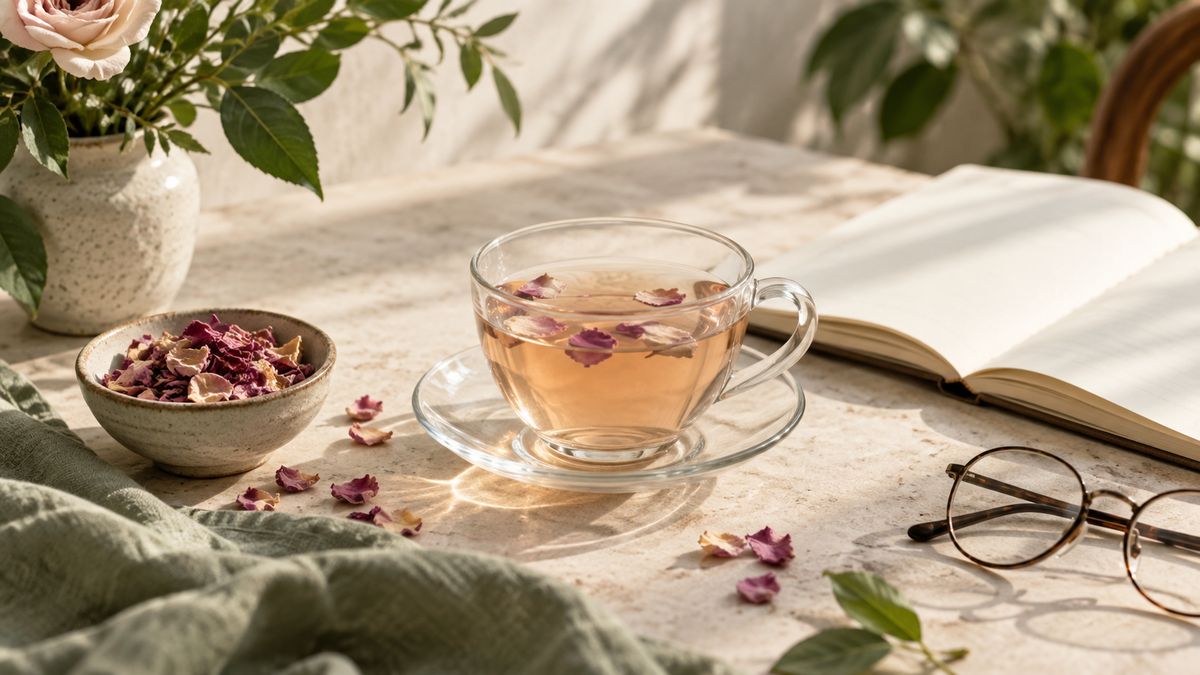
Rose petal tea is a fragrant, caffeine-free drink, but strong health claims run ahead of the evidence for an ordinary brewed cup. Research on Rosa damascena includes aromatherapy, extracts, oils, powders and other preparations—not all rose tea. Some findings are promising, yet small studies, varied methods and low-to-moderate certainty mean rose tea should not be presented as a treatment.
The most dependable everyday “benefits” are practical: hydration, a caffeine-free option and a sensory ritual you enjoy. Anything more specific needs the product, preparation, population and outcome to match the evidence.
Why is “rose benefits” too broad a question?
Rose is not one standardized intervention. Research may examine:
- Inhaled rose essential-oil aroma
- Topical oil or cream
- Rose water or syrup
- Capsules, powders or extracts
- Dried flower preparations
- Tea made from petals
- Different rose species and varieties
These products differ in concentration and route. A positive trial of aromatherapy cannot prove that swallowed tea has the same effect. Likewise, an extract dose cannot be converted reliably into a household spoon of petals.
What does the clinical evidence look like?
A 2017 systematic review of Rosa damascena found a small body of human trials across several uses and preparations. The authors described promising areas but called for standardized products and confirmatory studies. Later reviews have examined mood, stress, pain, menstrual outcomes and gastrointestinal conditions, again using mixed forms of rose.
Some meta-analyses report favourable pooled results for particular outcomes. But pooled numbers must be interpreted alongside study quality, risk of bias, heterogeneity and the fact that many trials are not tests of simple rose-petal tea in healthy adults.
Does rose tea reduce stress or anxiety?
Reviews of Rosa damascena interventions report possible improvements in some anxiety or stress measures, while noting that evidence quality can range from very low to moderate. Many interventions involve aroma or defined preparations. It is fair to say the scent may feel calming to some people; it is not fair to promise that tea treats an anxiety disorder.
Does rose tea help menstrual pain?
Rose has been studied in relation to pain and menstrual outcomes, but preparations, populations and methods differ. A meta-analysis of acute pain trials reported no statistically significant pooled pain reduction for oral rose interventions and called for stronger trials. Do not use petal tea to delay care for severe, new or worsening pain.
Does rose tea improve digestion?
A 2025 systematic review and meta-analysis reported some positive gastrointestinal outcomes for Rosa damascena interventions, including certain constipation measures. That does not establish an effective dose of everyday rose tea, and the authors called for standardized methods and wider research.
Persistent constipation, bleeding, severe abdominal pain, unexplained weight loss or vomiting requires medical assessment rather than a flower-tea experiment.
What about antioxidants?
Rose petals contain plant compounds that can show antioxidant activity in laboratory tests. “Contains antioxidants” does not itself demonstrate a meaningful clinical outcome in people. Digestion, dose, preparation and the entire diet matter, and a colourful laboratory assay is not the same as disease prevention.
Can rose tea detox the body or improve skin?
These are popular marketing claims, but “detox” is not a defined result for rose tea, and evidence does not justify promising clearer skin from a cup. Hydration supports normal body function, but the liver, kidneys, lungs and digestive system do the work of processing and elimination.
What can you confidently expect from a cup?
- A naturally caffeine-free drink when the product is pure rose petals
- A floral sensory experience and an alternative to sweetened beverages
- Water intake as part of normal hydration
- A food ritual that may feel personally relaxing
- A versatile culinary ingredient for hot, iced and blended drinks
Those are modest claims, but they are useful and honest. Enjoyment does not need to be converted into a medical promise.
How to judge a rose-health headline
- Identify the preparation: tea, extract, oil or aroma?
- Identify the population: healthy adults or people with a diagnosed condition?
- Check the outcome: a symptom questionnaire, a laboratory marker or a clinical event?
- Look for a comparison group: was the study randomized and controlled?
- Read the limitations: sample size, duration, funding and risk of bias matter.
- Avoid the leap: “associated with” or “promising” does not mean “proven cure.”
A short glossary for reading rose research
- Randomized trial: participants are assigned to groups by chance to reduce bias.
- Placebo or control: the comparison used to estimate what changed beyond expectation or usual care.
- Meta-analysis: a statistical combination of suitably similar studies.
- Heterogeneity: how much study methods or results differ.
- Risk of bias: features that may systematically distort a result.
Even a statistically significant result may be small, short-lived or tied to a preparation unlike tea. Clinical relevance asks whether the change is large and dependable enough to matter in real life. That is the step a dramatic “rose benefit” headline often skips.
Frequently asked questions
Can I drink rose petal tea every day?
Many adults use food-grade petals as a beverage, but there is no universal medicinal daily dose. Start with a moderate label-directed cup and seek advice for pregnancy, breastfeeding, medicine use or ongoing symptoms.
Does rose tea help you sleep?
Pure rose tea is caffeine-free, and its aroma may suit a bedtime ritual. Evidence does not establish it as an insomnia treatment.
Is rose tea good for weight loss?
No tea guarantees weight loss. Replacing a sugary drink with unsweetened rose tea may reduce that drink’s calories, but the broader eating and activity pattern matters.
Does darker rose tea have more benefits?
Colour varies with petals, water and brewing. It is not a home measure of clinical effectiveness.
Can rose tea replace medicine?
No. Do not stop, delay or change prescribed treatment because of a rose study or product claim.
Reference sources
- Systematic review of Rosa damascena clinical evidence and safety
- Systematic review and meta-analysis of rose interventions for anxiety, depression and stress
- Systematic review and meta-analysis of oral and topical rose for acute pain
- 2025 systematic review and meta-analysis of rose interventions in gastrointestinal disorders
Continue exploring Rose Petal Tea
Ready to make your own cup? View Sendriya Life Rose Petal Tea – 25g for the current ingredient declaration, pack information and availability.
This article provides general food and wellness information. It is not medical advice and does not replace care from a qualified health professional.


