

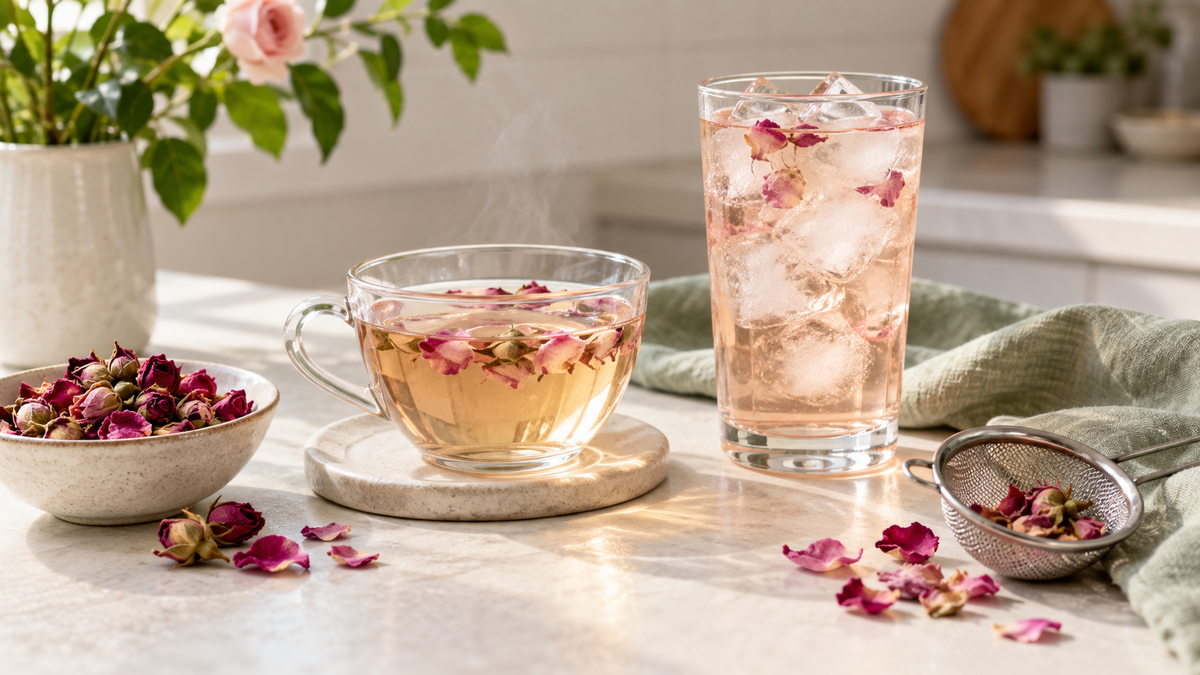
For hot rose petal tea, steep 1–2 teaspoons dried food-grade petals in 200–250 ml hot water for about 5 minutes, covered, then strain. For iced tea, make a slightly concentrated but short infusion and pour it over plenty of ice. For cold brew, steep covered in the refrigerator and keep the finished drink chilled.
Rose’s aroma is delicate but can turn perfumed or bitter when over-extracted. Measure the petals, cover the vessel and strain on time; those three steps solve most brewing problems.
What equipment do you need?
- A cup, teapot or clean lidded jar
- A teaspoon or small digital scale
- A fine strainer that catches petal fragments
- Fresh drinking water
- A clean covered bottle for chilled tea
Hot rose petal tea recipe
Ingredients for one cup
- 1–2 teaspoons dried edible rose petals
- 200–250 ml hot water
- Optional: a little honey or lemon after tasting
Method
- Warm the cup with hot water, then empty it.
- Add the petals. Begin with 1 teaspoon for a delicate cup.
- Pour over hot water and cover immediately.
- Steep for 5 minutes.
- Strain completely and taste it plain.
If the tea is too light but the petals smell fresh, increase the next brew to 1½ or 2 teaspoons. If it tastes bitter, reduce the time before adding more water.
Quick iced rose petal tea
- Steep 2 teaspoons petals in 150 ml hot water for 5 minutes.
- Strain into a heat-safe vessel.
- Pour over a glass filled with ice.
- Add chilled water to balance the flavour.
- Finish with lemon or a small amount of sweetener if desired.
The infusion may stay pale even when aromatic. Avoid using excessive petals just to create colour. If you want a pinker naturally blended drink, hibiscus adds colour and tartness, but then it is a rose–hibiscus blend rather than pure rose tea.
Refrigerator cold-brew rose tea
For 1 litre, combine 6–8 teaspoons dried edible petals with clean cold water in a covered jar. Refrigerate for 6–8 hours, strain well and taste. Keep chilled and use promptly.
Cold brew should not be left on the kitchen counter for hours. A refrigerator slows microbial growth but does not replace clean equipment or sensible storage.
How to brew rose with black or green tea
Add a pinch to ½ teaspoon of rose petals per cup to your usual tea leaves. Let the actual tea determine the water and time: cooler, shorter brewing generally suits delicate green tea, while black tea tolerates hotter water. Both blends contain caffeine.
What pairs well with rose?
| Pairing | What it contributes | Starting idea |
|---|---|---|
| Cardamom | Warm citrus-spice aroma | One lightly crushed pod per pot |
| Lemon | Brightness and acidity | Add only after straining |
| Hibiscus | Ruby colour and tartness | Use less hibiscus than rose |
| Mint | Cool green freshness | A few leaves per cup |
| Black tea | Body and caffeine | A small pinch of petals |
How to fix common problems
- Weak aroma: cover while steeping, check freshness and then slightly increase the petals.
- Bitter or woody: shorten the time, lower the ratio and check for stems or other material.
- Overly perfumed: dilute with water; use fewer petals next time.
- Dust in the cup: use a finer strainer and handle petals gently.
- Dull flavour: try fresh water and clean equipment free from coffee or spice residue.
Can you re-steep rose petals?
A second infusion is possible but usually lighter. Use fresh hot water and consume promptly. Wet petals should not sit at room temperature for later use.
How to scale rose tea for a one-litre pitcher
Start with 6 teaspoons of dried petals for one litre. For quick iced tea, steep them in 700 ml hot water for five minutes, strain, then add ice and chilled water to reach the final volume. Taste before sweetening. If the pitcher is too perfumed, dilution restores balance more effectively than extra lemon.
For a two-ingredient blend, keep rose dominant. Try 5 teaspoons rose with 1 teaspoon hibiscus for colour and tartness, or 5 teaspoons rose with a few mint leaves for freshness. Record the ratio because hibiscus and mint can quickly overtake delicate petals.
Does water quality matter for rose?
Yes, particularly because the infusion is subtle. Strong chlorine, stale kettle water or coffee residue can cover the aroma. Use fresh drinking water and a clean neutral vessel. Very hard water may change colour and mouthfeel, but expensive bottled water is unnecessary if your normal filtered water tastes clean.
Serving rose tea with food
Plain hot rose pairs with lightly sweet biscuits, fruit and nuts. Iced rose suits citrus, cucumber and mild savoury snacks. Avoid heavily perfumed desserts in the first tasting; they make it difficult to notice the tea’s own character.
Frequently asked questions
Should rose tea be boiled?
Pouring hot water over petals is enough. Hard boiling can flatten the delicate aroma or bring out harsher notes.
Do I need to rinse dried petals?
Follow the package directions. Rinsing a properly packed dried product can wash away aroma and adds moisture; it does not make unknown florist roses food-safe.
Can I add milk to rose petal tea?
Pure rose infusion is very light for milk. Rose works better with black tea and milk, or in a recipe designed as a rose milk drink.
Why did lemon change the colour?
Plant pigments can respond to acidity. The amount of visible change depends on the petals and water, and it is not a quality test.
How much should I make in advance?
Make only what you can keep covered, refrigerated and use while fresh. If the drink develops an unusual odour, gas, cloudiness or taste, discard it.
Reference sources
- Colorado State University Extension: choosing and using edible flowers
- Royal Horticultural Society: culinary uses for edible flowers
Continue exploring Rose Petal Tea
Ready to make your own cup? View Sendriya Life Rose Petal Tea – 25g for the current ingredient declaration, pack information and availability.
This article provides general food and wellness information. It is not medical advice and does not replace care from a qualified health professional.


