

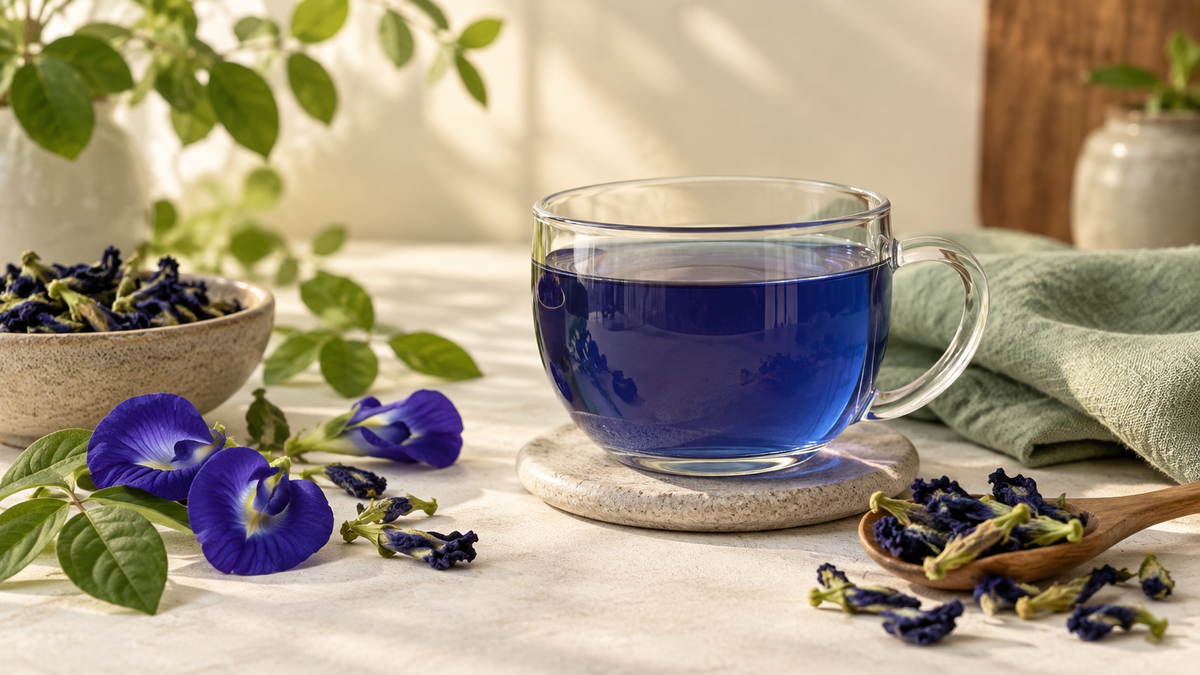
Butterfly pea tea is a naturally caffeine-free herbal infusion made from the dried blue flowers of Clitoria ternatea. In India the flower is widely known as Aparajita, while blue tea and butterfly pea flower tea are common market names. The cup is famous for its jewel-blue colour, mild earthy taste and dramatic shift towards violet or pink when lemon is added.
Despite the word “tea,” a pure butterfly pea infusion contains no leaves from the tea plant, Camellia sinensis. It is therefore more precisely called a tisane or herbal infusion. This distinction matters when you are choosing a caffeine-free drink: pure dried Aparajita flowers are caffeine-free, but a commercial blend may contain green or black tea, so the ingredient list still deserves a look.
What is butterfly pea tea called in India?
The same ingredient appears under several names: Aparajita tea, blue tea, butterfly pea flower tea and Clitoria ternatea infusion. Aparajita plants may produce blue, white or other flower variations, but the vivid beverage associated with blue tea is made from the deeply coloured blue petals. Names such as Asian pigeonwings and blue pea also appear internationally.
When shopping, focus on the ingredient declaration rather than the most attractive front-of-pack name. A single-ingredient product should list only edible butterfly pea flowers. Powders, flavoured drink mixes and blends can behave differently in water and may include sweeteners, colours or true tea leaves.
What does butterfly pea tea taste like?
The colour is bold; the flavour is gentle. Plain butterfly pea tea is usually mild, lightly earthy and faintly vegetal, with much less bitterness than strong black or green tea. Some cups have a soft pea-like or hay-like note. The flower is frequently used as a visual and aromatic base for lemon, mint, ginger, lemongrass, honey or fruit.
A harsh, woody or strongly astringent cup often points to too many flowers, very long steeping, stale material or poor storage. Start with a small pinch and increase gradually. Because the flavour is delicate, clean water and a covered cup make a noticeable difference.
Why is butterfly pea tea blue?
The petals contain blue polyacylated anthocyanins known as ternatins. These water-soluble plant pigments move into the hot water during steeping. Their molecular form changes with acidity, which is why the same infusion can appear blue in ordinary water and violet or pink after lemon or another acidic ingredient is added.
The colour is not proof of a particular health effect, and deeper blue does not automatically mean “more beneficial.” It mainly reflects pigment concentration, water chemistry, acidity, flower quantity, steeping and light exposure. Natural variation between harvests is normal.
Does butterfly pea tea contain caffeine?
Pure butterfly pea flowers are naturally caffeine-free. They are not decaffeinated; the plant simply does not supply caffeine in the way tea leaves, coffee beans or cacao do. This makes a plain infusion suitable for people who are reducing caffeine or want a colourful drink later in the day.
Check blends carefully. “Blue tea” may refer to butterfly pea mixed with green tea, black tea or matcha. Those versions can contain caffeine even though the blue flower itself does not.
How do you make a basic cup?
- Place a small pinch of dried flowers in a cup or infuser.
- Add about 200 ml hot water.
- Cover and steep for 5 to 7 minutes.
- Strain, taste and adjust the next cup rather than overcrowding this one.
- Serve plain, or add lemon only after steeping to watch the colour change.
Sendriya Life’s current product guidance uses a small pinch and a 5-to-7-minute steep. Whole flowers vary in size, so visual quantity is less exact than weighing. For repeatable results, use the same spoon, cup volume and water source each time.
How can butterfly pea flowers be used?
- Hot infusion: serve plain or with a little honey and lemon.
- Iced tea: brew slightly stronger, cool, then pour over ice.
- Colour-changing lemonade: keep the blue infusion and lemon mixture separate until serving.
- Layered drinks: pour liquids slowly over ice so differences in density create visible bands.
- Rice, desserts and syrups: use the strained infusion as a natural blue liquid in food.
The US FDA permanently lists butterfly pea flower extract as a colour additive exempt from certification for specified food uses, including teas. That regulatory listing concerns defined extract uses; it should not be misread as proof for every health claim made about home-brewed tea.
How do you recognise good dried flowers?
Look for dry, distinct flowers with a blue to indigo tone and a clean, mild botanical aroma. Avoid visible moisture, webbing, clumps, mould-like spots or a stale smell. Store the opened pack tightly closed, away from sunlight and steam, and always use a dry spoon. Light can fade anthocyanin pigments, while humidity can damage dried botanicals.
How do you compare a pure flower tea with a blue-tea blend?
Begin with the ingredient list. A single-ingredient product lets you learn the natural colour, aroma and mild flavour of Aparajita itself. A blend may add lemongrass, spices, fruit, green tea or sweetener. Those additions are not inherently better or worse, but they change caffeine, allergens, taste and the meaning of any claim.
Also compare the flower form and storage. Whole or recognisable dried flowers make identity easier to assess, while excessive dust can brew quickly and be harder to strain. Colour should look naturally varied rather than uniformly painted. Keep the pack sealed and dry: humid storage can flatten aroma and damage the ingredient long before the best-before date.
Frequently asked questions
Is butterfly pea tea the same as green tea?
No. Green tea comes from Camellia sinensis leaves and naturally contains caffeine. Butterfly pea tea comes from Clitoria ternatea flowers and is caffeine-free when unblended.
Is Aparajita tea naturally blue?
Yes. Hot water extracts the flowers’ natural anthocyanin pigments. A very bright artificial-looking drink may still deserve an ingredient check, but genuine flowers can create a striking blue cup without added colour.
Can butterfly pea tea be served with milk?
Yes. Use a concentrated infusion, strain it and add warm or cold milk. The result is usually pastel blue. Acidic ingredients such as lemon can curdle dairy, so do not combine lemon and milk casually.
Why is my blue tea pale?
You may be using too much water, too few flowers, a short steep or older flowers exposed to light. Water acidity also changes the shade. Adjust one variable at a time.
Can children drink it?
Food use is different from using an herb to treat a condition. Parents should consider the child’s age, allergies, medicines and overall diet, and ask a paediatric professional when unsure.
Reference sources
- Review of butterfly pea anthocyanins, stability and food applications
- US FDA regulatory status for butterfly pea flower extract
Continue exploring Butterfly Pea Flower Tea (Aparajita)
- Why butterfly pea tea changes colour
- How to brew butterfly pea tea hot, iced and cold
- Is butterfly pea tea safe to drink every day?
Ready to make your own cup? View Sendriya Life Butterfly Pea Flower Tea (Aparajita) – 40g for the current ingredient declaration, pack information and availability.
This article provides general food and wellness information. It is not medical advice and does not replace care from a qualified health professional.


