

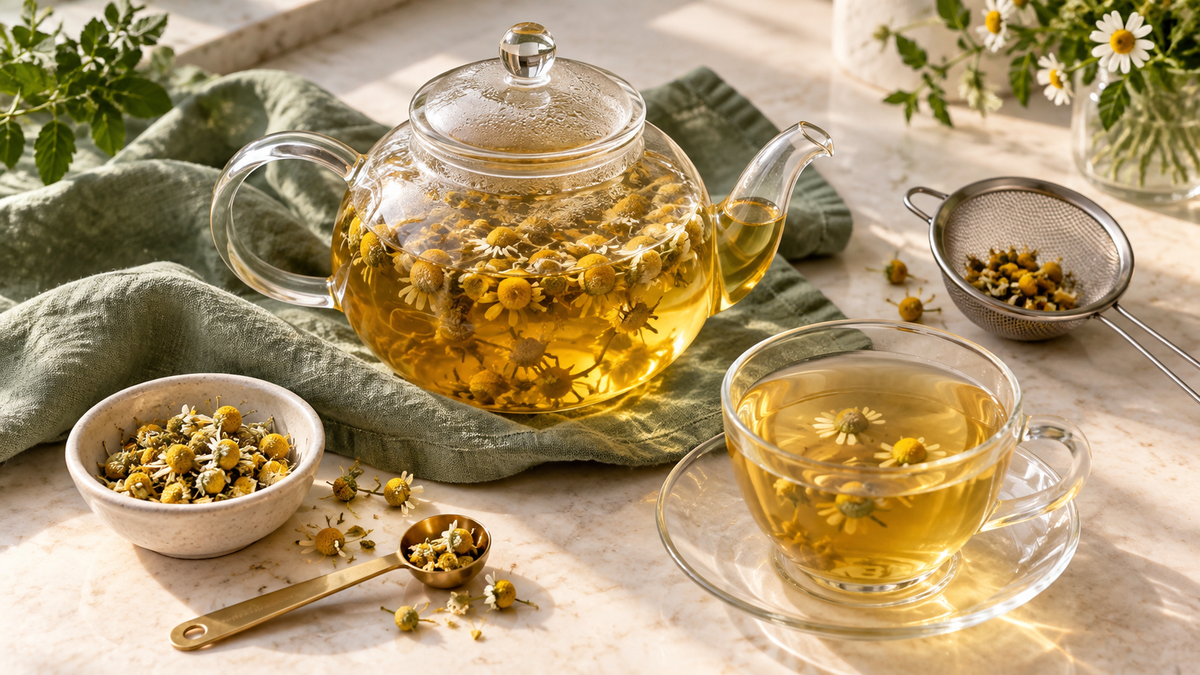
Use 1 to 2 teaspoons of whole dried chamomile flowers for about 200 ml hot water, cover the vessel and steep for approximately 5 minutes. Strain completely and adjust the next cup to taste. If chamomile becomes bitter, reduce the flower quantity or steeping time before adding more sweetener.
Quick chamomile brewing table
| Style | Starting quantity | Water | Time |
|---|---|---|---|
| Delicate hot cup | 1 teaspoon | 200 ml hot water | 4–5 minutes |
| Fuller hot cup | 2 teaspoons | 200 ml hot water | 5 minutes |
| Iced chamomile | 2 teaspoons | 150 ml hot water plus ice | 5 minutes |
| Cold infusion | 2–3 tablespoons | 1 litre cold water | 6–8 hours refrigerated |
Whole flowers are light and irregular. Spoon measurements therefore vary more than they do for a dense powder. Use the table as a sensory starting point, not a therapeutic dose.
Step-by-step hot method
- Use a clean cup, teapot and fine strainer.
- Add the whole flowers. Start with 1 teaspoon if you are sensitive to floral flavours.
- Heat fresh drinking water until hot; a long rolling boil is unnecessary.
- Pour over the flowers and cover immediately.
- Steep for 4 minutes, taste, and continue to about 5 minutes if desired.
- Strain every flower and fine particle.
- Add honey or lemon only after tasting the plain cup.
Why should chamomile be covered while steeping?
A cover keeps the water temperature steadier and holds aromatic vapours near the infusion. Chamomile’s character is strongly connected to aroma, so an open mug that cools rapidly may smell flatter. A saucer works if your infuser has no lid.
What water temperature works best?
Freshly heated hot water extracts the flowers efficiently. If your cup tastes harsh, allow the kettle to rest briefly before pouring and shorten the steep. Water chemistry also matters: strongly chlorinated or mineral-heavy water can cover the gentle apple-like character.
Why is my chamomile tea bitter?
- You used more flowers than the cup volume needed.
- The flowers stayed in the cup while you drank it.
- The steep ran far beyond 5 to 7 minutes.
- The material contains a high proportion of stems or very fine dust.
- The flowers are old, damp or poorly stored.
Fix one variable at a time. Start with fewer flowers, a five-minute maximum and complete straining. Sweetness can balance mild bitterness, but it should not be used to hide stale flavour.
Why does my tea taste weak?
Check the mug size first. Many mugs hold 300 to 400 ml, nearly twice the volume assumed by a standard method. Use a little more chamomile, cover the vessel and confirm the flowers still smell fresh before extending the steep for a long time.
How to make iced chamomile tea
- Steep 2 teaspoons in 150 ml hot water for 5 minutes.
- Strain into a heat-safe vessel.
- Add honey while warm if using it.
- Cool briefly, then pour over a full glass of ice.
- Add mint, cucumber or a small squeeze of lemon.
Brewing concentrated tea prevents the melting ice from making the drink watery. Refrigerate leftovers promptly and use them within 24 to 48 hours.
Can you cold-brew chamomile?
Yes. Add whole flowers to cold drinking water in a clean covered jug and refrigerate for 6 to 8 hours. Strain through a fine mesh. The flavour can be softer and less bitter than a hot infusion, but the long contact time makes refrigeration and clean equipment important.
Best flavour pairings
- Honey and a narrow strip of lemon peel
- Fresh mint and cucumber for iced tea
- A thin slice of ginger for warmth
- A few rose petals for a fuller floral aroma
- A very small pinch of lavender for an evening blend
Can chamomile flowers be re-steeped?
A second immediate steep is possible, but it will be lighter. Use fresh hot water and a slightly longer time. Do not save wet flowers on the counter for later because moist botanical material is perishable.
Volume measures versus weight
Whole chamomile heads are airy, so two teaspoons can hold different amounts depending on whether they are loosely scooped or crushed down. For everyday tea, a level spoon is practical. For recipe testing or a large pot, a small scale gives more repeatable results. Avoid packing the flowers tightly into the spoon.
If you switch from whole heads to a fine cut, start with less or shorten the steep. Small particles expose more surface area to water and can become strong quickly. A paper filter produces a very clear cup but may hold back some aroma; a fine metal basket offers more room and is easy to remove on time.
How to serve chamomile without hiding it
First taste the strained infusion plain. Honey adds round sweetness, lemon adds brightness and a slice of apple echoes chamomile’s aroma. Add only one element to the first cup from a new pack. This makes it easier to learn the flowers and to identify which ingredient caused bitterness or discomfort.
Frequently asked questions
Do I need to rinse dried chamomile?
Follow the product label. Rinsing can wash away aroma and make lightweight flowers difficult to handle. A food-grade product intended for infusion normally goes directly into the brewer.
Can I boil chamomile in milk?
You can make a milk-based drink, but direct boiling may flatten the aroma and makes straining harder. Brew a concentrated water infusion, strain and then add warm milk.
How do I keep petals out of the cup?
Use a fine mesh rather than a wide tea-ball. Paper filters also catch small particles but can slightly soften the aroma.
Can I add sugar?
Yes, but taste first. Honey, date syrup or ordinary sugar all change the cup; none is required for brewing.
Why does chamomile sometimes smell like apples?
The association is common enough to appear in the plant’s traditional naming history. Natural aromatic compounds create the sweet, fruity impression.
Continue exploring Chamomile Flower Tea
- Chamomile taste, caffeine and types
- Chamomile tea and sleep evidence
- Chamomile cautions and allergies
Ready to make your own cup? View Sendriya Life Chamomile Flower Tea – 50g for the current ingredient declaration, pack information and availability.
This article provides general food and wellness information. It is not medical advice and does not replace care from a qualified health professional.


