

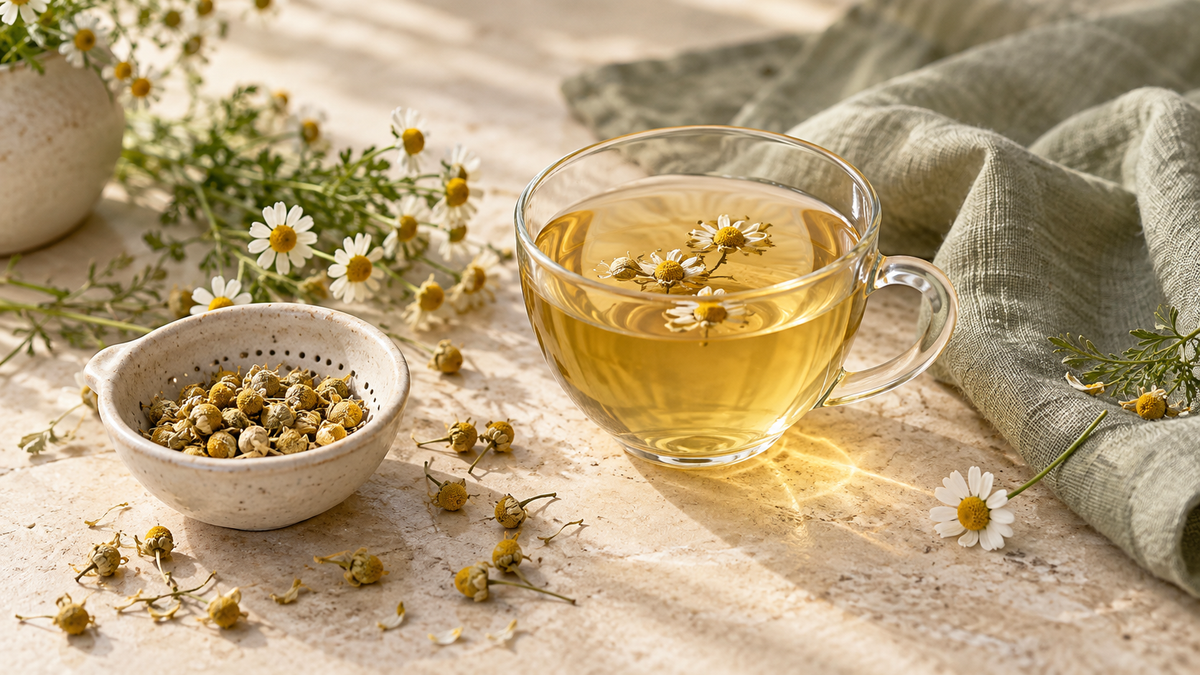
Chamomile tea is a naturally caffeine-free herbal infusion made by steeping dried chamomile flowers in hot water. It is known for a gentle floral aroma, soft apple-like notes and a light golden cup. In India, chamomile is also searched for as Babune ka phool. The two best-known tea species are German chamomile and Roman chamomile, which are related but not identical.
Is chamomile a true tea?
Botanically, no. Black, green, white and oolong teas come from Camellia sinensis. Chamomile comes from flower heads in the daisy family, so it is more precisely a tisane. Everyday language still calls it tea because it is brewed and enjoyed in the same way.
What does Babune ka phool mean?
Babune ka phool is a common Indian and South Asian market name used for chamomile flower. Names can vary by seller and region, so the botanical declaration gives the clearest identity. Sendriya Life currently declares Matricaria chamomilla, a name used for German chamomile.
German chamomile versus Roman chamomile
| Feature | German chamomile | Roman chamomile |
|---|---|---|
| Common botanical names | Matricaria chamomilla or Matricaria recutita | Chamaemelum nobile |
| Growth habit | Annual, upright plant | Low-growing perennial |
| Typical cup | Soft, floral, apple-like | Often stronger and more bitter |
| Common tea use | Widely used | Used, but less common in many retail teas |
Both may be sold as chamomile, but they are not interchangeable in every research paper or concentrated product. For an everyday infusion, match the botanical name on the pack to the guidance you are reading.
What does chamomile tea taste like?
A well-brewed cup is delicate rather than perfumed. Expect a light floral aroma, mild natural sweetness and an apple or hay-like finish. Whole flower heads can produce a fuller aroma than finely broken material because fewer volatile compounds have escaped before brewing.
Bitterness usually comes from too much chamomile, very long steeping or excessive heat. The tea should not taste musty, dusty or damp. Those flavours can point to age or poor storage rather than the natural ingredient.
Does chamomile tea have caffeine?
Pure chamomile flowers contain no natural caffeine. A blend can be different: chamomile combined with green tea, black tea, yerba mate or cacao may contain caffeine. Read the complete ingredient list when caffeine avoidance is important.
How is chamomile tea made?
- Add 1 to 2 teaspoons of whole dried flowers to an infuser or cup.
- Pour over about 200 ml hot water.
- Cover and steep for about 5 minutes.
- Strain thoroughly so small flower pieces do not continue extracting.
- Taste plain before adding honey, lemon or another herb.
This matches Sendriya Life’s current product guidance. Begin at the lower quantity if you are new to whole flowers. They are light and occupy more space than dense leaf tea, so a spoonful can look generous without being heavy.
When do people drink chamomile tea?
Many people associate it with an evening wind-down because it is warm, aromatic and caffeine-free. Others drink it after meals or use it as a base for iced floral drinks. A comforting ritual can be valuable without turning the drink into a promise to cure insomnia or anxiety.
What pairs well with chamomile?
- Honey: supports the soft floral profile.
- Lemon: brightens the cup but can dominate it quickly.
- Ginger: adds warmth and structure.
- Mint: makes an especially fresh iced infusion.
- Lavender: use very lightly so the blend does not become perfumed.
- Rose petals: add fragrance and visual interest.
How do you judge flower quality?
Choose flowers that are dry, recognisable and pleasantly aromatic, with cream petals and yellow centres rather than damp clumps or grey dust. Natural breakage and colour variation are normal. Store them airtight, away from sunlight, steam and strong-smelling spices. Always use a dry spoon.
How to judge whole chamomile flowers before brewing
Whole flower heads naturally vary in size and colour. Look for recognisable yellow centres and pale petals, a clean apple-like herbal aroma and a dry texture. Some broken material is normal in a dried botanical, but a pack dominated by powder will extract faster and may taste more bitter. Damp clumps, condensation, visible mould or a stale musty smell are reasons not to brew it.
Packaging should identify the ingredient clearly. German chamomile may appear as Matricaria chamomilla, Matricaria recutita or related accepted naming; Roman chamomile is usually Chamaemelum nobile. The names help you understand what you bought, but they do not replace food-business labelling, storage directions or allergen awareness.
Can chamomile tea vary from harvest to harvest?
Yes. Climate, harvest timing, flower-to-stem ratio, drying and age all influence aroma and appearance. Natural variation is expected; it is different from spoilage. Use the same measured ratio for a new pack, taste at the five-minute mark and adjust only after learning its strength.
Frequently asked questions
Is chamomile the same as a daisy?
Chamomile belongs to the Asteraceae or daisy family and its flowers resemble small daisies, but not every daisy is chamomile or food-safe.
Can chamomile replace regular chai?
It can replace the ritual of a hot drink, but the flavour and caffeine are very different. Chamomile is lighter, unspiced and caffeine-free.
Why is my chamomile tea greenish?
Small pieces of stem, receptacle and flower tissue can add green-gold tones. The exact shade varies with the harvest and strength.
Can I eat the steeped flowers?
They are food material, but most people strain them because the wet texture and fine particles are not pleasant.
Is every chamomile product caffeine-free?
No. Pure flower is caffeine-free, but a blend may include caffeinated tea leaves. Check the label.
Reference sources
Continue exploring Chamomile Flower Tea
- How to brew whole chamomile flowers
- What research says about chamomile and sleep
- Who should be cautious with chamomile tea
Ready to make your own cup? View Sendriya Life Chamomile Flower Tea – 50g for the current ingredient declaration, pack information and availability.
This article provides general food and wellness information. It is not medical advice and does not replace care from a qualified health professional.


