

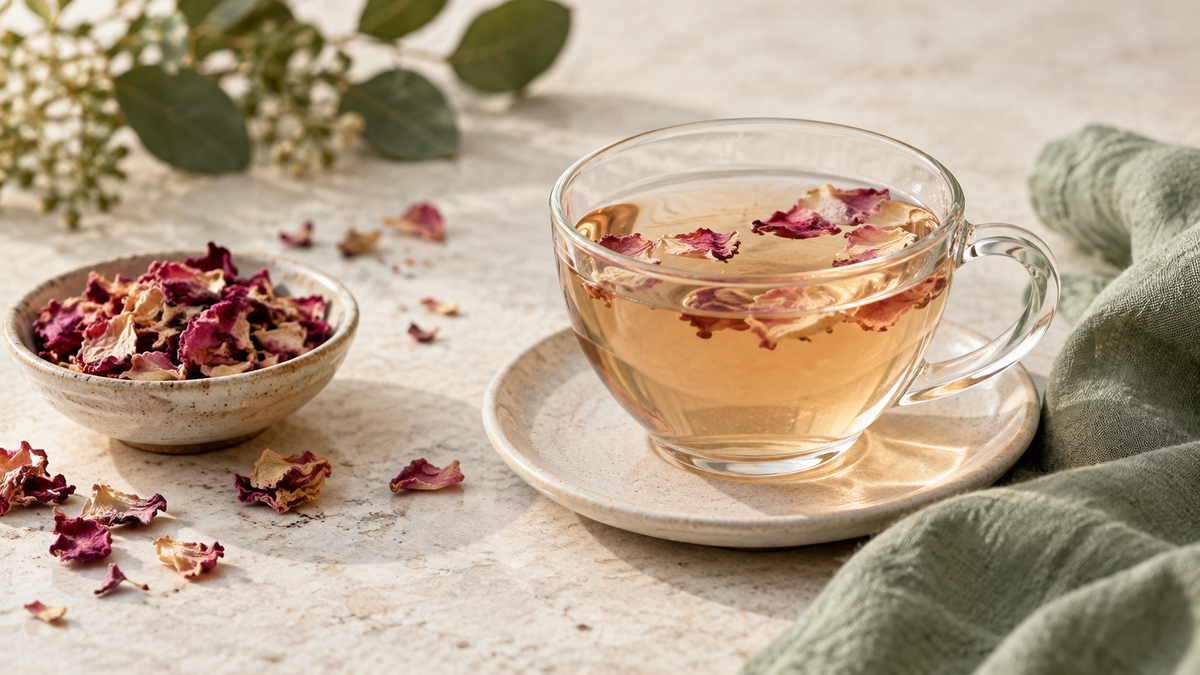
Rose petal tea is a naturally caffeine-free floral infusion made by steeping food-grade dried rose petals in hot water. It tastes softly aromatic, lightly sweet in fragrance and sometimes gently astringent or bittersweet. The cup is usually pale gold to blush—not bright pink—and can be enjoyed hot, chilled, blended with tea or used in culinary recipes.
Rose is familiar in Indian sweets, sharbat and festive cooking, but the subtle tea behaves differently from rose essence or syrup. Whole petals offer a quieter, more botanical flavour, and careful brewing keeps it elegant rather than perfumed.
What is rose petal tea?
Rose petal tea is a tisane made from petals of food-grade roses in the genus Rosa. Sendriya Life’s current ingredient declaration identifies edible rose petals as Rosa spp. Because the drink contains no Camellia sinensis leaves, a pure rose-petal infusion is not a true tea in the botanical sense.
Rose buds, petals, rosehips, rose water and rose essential oil are different ingredients. A petal infusion should not be treated as interchangeable with any of them.
What does rose petal tea taste like?
Expect a floral aroma first, then a light plant-like sweetness, mild astringency and a clean finish. Some petals lean fruity or honeyed; others are greener or more bitter. Variety, harvest, drying, age, ratio and water all affect the result.
| Cup style | What you may notice | How to adjust |
|---|---|---|
| Light | Delicate aroma, pale colour | Cover the cup while steeping |
| Balanced | Floral, lightly sweet, faintly dry | Enjoy plain or with a little honey |
| Over-brewed | Bitter, woody or perfumed | Dilute and shorten the next steep |
Does rose petal tea contain caffeine?
Pure rose petals are naturally caffeine-free. However, a rose black tea, rose green tea or masala blend can contain caffeine from tea leaves. A front label saying “rose tea” does not settle the question; read every ingredient.
What colour should rose petal tea be?
A natural infusion may be light straw, golden, amber or faintly pink depending on the petals and water. Dry pink petals do not guarantee pink liquid. Bright colour is not a measure of quality or “strength,” and a pale cup can still be very aromatic.
How do you brew rose petal tea?
- Place 1–2 teaspoons of dried edible rose petals in a cup.
- Add 200–250 ml hot water.
- Cover and steep for about 5 minutes.
- Strain completely.
- Taste before adding honey, lemon or another tea.
For a lighter first cup, begin with 1 teaspoon. If the aroma is weak, check freshness and cover the cup before increasing the amount. See our hot and iced rose-petal brewing guide for recipes and troubleshooting.
How can rose petals be used beyond a plain cup?
- Iced rose tea: chill a strained infusion and serve over ice.
- Rose black tea: add a small pinch of petals to regular black tea for aroma.
- Rose lemonade: combine cooled infusion with lemon and sweetener.
- Rose sugar: infuse dry sugar with a small amount of culinary petals.
- Desserts: use finely crushed petals sparingly in biscuits, kheer or fruit.
- Ice cubes: freeze a few food-grade petals in drinking water for visual garnish.
How is petal tea different from rose water?
Rose water is produced by distillation or formulated as a culinary flavouring and can be much more concentrated in aroma. Petal tea is a direct water infusion. Substitute only with a recipe that accounts for the ingredient’s concentration and labelling.
How do you choose petals for tea?
Choose petals expressly sold for culinary use. Florist roses may have pesticide or post-harvest treatments not intended for consumption. Proper identity, food handling and labelling matter more than colour or a romantic scent.
Petals, buds and rosehips: what changes in the cup?
Loose petals infuse quickly and emphasise aroma. Whole dried rose buds contain tightly layered petals and may need slightly more time or gentle opening, while rosehips are the fruit and create a tangier, fuller drink. A package containing all three should be treated as a blend rather than pure petal tea.
Do not judge strength by the number of large pieces. Petals are light, and spoon volume changes as they break. Start with a loose level measure, keep the cup covered and strain at five minutes.
Why rose flavour varies so much
Roses are grown in many varieties, and fragrance ranges from honeyed and fruity to spicy or green. Drying preserves some notes while losing others. A culinary rose selected for aroma can taste very different from a beautiful but faint-smelling garden rose.
Traditional rose drinks may also include sugar, milk, spices or distilled rose water, which creates a stronger flavour memory than plain petals can match. Approach the tisane as a subtle botanical drink rather than expecting syrup intensity.
Frequently asked questions
Is rose tea the same as rosehip tea?
No. Rose petal tea uses flower petals. Rosehip tea uses the fruit that forms after flowering and has a different tart flavour and composition.
Can I drink rose petal tea at night?
Pure rose petals are caffeine-free, so they do not add caffeine. The tea is not a proven sleep treatment, and a large late drink may interrupt sleep.
Why does rose tea taste bitter?
Too many petals, a long steep, stale material or naturally bitter flower parts may be responsible. Shorten the brew and use a labelled petal-only product.
Can I mix rose with green tea?
Yes. Use a small pinch of petals and brew at the temperature and time suitable for the green tea. The result will contain caffeine.
How should dried rose petals be stored?
Keep them sealed, dry and away from heat, sunlight and strong odours. Discard petals that become damp, mouldy or musty.
Reference sources
- Colorado State University Extension: edible flower identity and handling
- Royal Horticultural Society guide to edible flowers including roses
Continue exploring Rose Petal Tea
Ready to make your own cup? View Sendriya Life Rose Petal Tea – 25g for the current ingredient declaration, pack information and availability.
This article provides general food and wellness information. It is not medical advice and does not replace care from a qualified health professional.


