

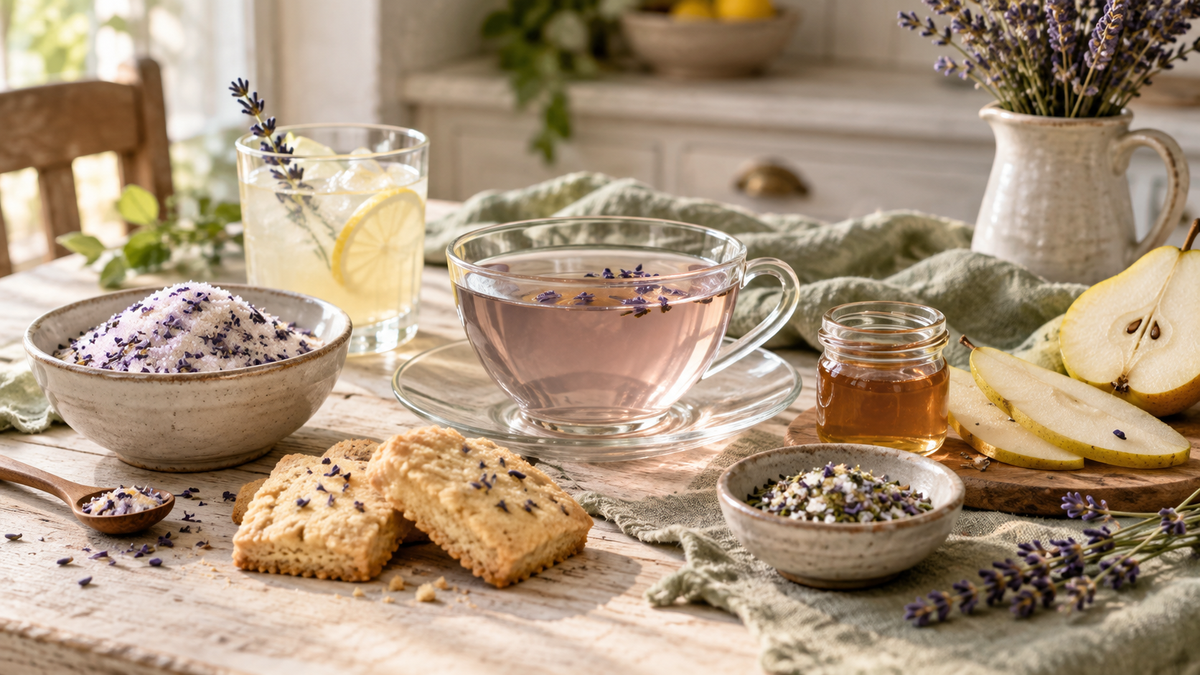
Culinary lavender works best as an accent: start with a pinch, let it infuse, then taste before adding more. Use only buds clearly sold for food. Their floral-herbal character can lift tea, sugar, lemonade, biscuits, syrup, fruit and savoury seasoning, but excess lavender quickly tastes soapy or camphoraceous.
Before any recipe, rub a bud between your fingers and smell it. Fresh culinary lavender should be clean, floral and herbal, not damp or musty. Whole buds are easier to control than powder.
1. Brew a simple lavender flower tea
Use about ½ teaspoon dried lavender buds in 200–250 ml hot water. Cover, steep for 4–5 minutes and strain completely. Taste it plain before adding honey or lemon.
For a softer blend, pair ¼ teaspoon lavender with 1 teaspoon chamomile. For a caffeinated morning cup, add only a pinch to your usual black tea portion. Lavender should sit behind the main tea, not dominate it.
2. Make lavender sugar
Combine 1 teaspoon dried lavender with 200 g caster sugar in a clean airtight jar. Leave for several days, shaking gently once a day, then sieve if you want a smooth texture. Use a teaspoon in tea, dust it over fruit or substitute a small part of ordinary sugar in baking.
Keep the jar perfectly dry. If condensation, dampness or an unusual smell develops, discard it.
3. Infuse lavender lemonade
- Steep ½ teaspoon lavender in 250 ml hot water for 4 minutes.
- Strain and cool.
- Combine with 500–750 ml chilled water, lemon juice and sweetener to taste.
- Serve over ice and adjust with more water before adding more lavender.
The goal is a lemon drink with a floral top note, not a cup of perfume. A pale colour is normal; do not expect the drink to turn purple.
4. Add a pinch to shortbread
For a batch using about 200 g flour, begin with ½ teaspoon finely chopped culinary lavender. Mix it thoroughly through the sugar before making the dough so no bite contains a concentrated cluster. Lemon zest is a natural partner.
Baking concentrates aroma differently from water infusion, and the flavour may strengthen after the biscuits cool. Test a small batch before increasing the quantity.
5. Prepare a light lavender syrup
Warm equal volumes of water and sugar until dissolved, remove from the heat, then add about ½ teaspoon lavender per 250 ml liquid. Infuse for 5 minutes, strain very well and cool promptly. Refrigerate in a clean container and use in small amounts in sparkling water, iced tea or desserts.
This is a fresh culinary syrup, not a shelf-stable preserve. Make small batches and discard it if fermentation, gas, cloudiness or an off smell appears.
6. Pair lavender with fruit
A tiny pinch of finely chopped buds or lavender sugar works with pear, peach, berries, lemon and apricot. Try it in baked pears, a fruit compote or a simple yoghurt topping. Acidity and fruit aroma keep lavender from feeling heavy.
Use especially little on uncooked fruit because there is no long infusion to soften the buds. For a smoother result, flavour the syrup or sugar rather than sprinkling whole buds directly.
7. Create a savoury herb seasoning
Lavender can sit alongside rosemary, thyme, oregano and fennel in a southern French-inspired herb blend. Start with roughly 1 part lavender to 8–12 parts other dried herbs. Use a small pinch on roasted vegetables, potatoes or a marinade.
Because salt and roasting can intensify aromas, season lightly before cooking and adjust at the table. Label homemade blends clearly so lavender is not mistaken for a decorative flower.
Quick ratio guide
| Use | Conservative starting amount | Key control |
|---|---|---|
| Tea | ½ tsp per cup | Steep 4–5 minutes |
| Sugar | 1 tsp per 200 g | Infuse airtight and dry |
| Shortbread | ½ tsp per 200 g flour | Distribute evenly |
| Syrup | ½ tsp per 250 ml liquid | Strain and refrigerate |
| Herb blend | 1 part in 9–13 total parts | Keep it an accent |
What not to do with lavender
- Do not cook with florist stems, potpourri or material sold only for decoration.
- Do not substitute essential oil drop-for-drop for dried buds.
- Do not assume every lavender species tastes the same.
- Do not hide musty or stale material inside a strongly flavoured recipe.
- Do not increase the amount before tasting a cooled or rested batch.
How to scale a lavender recipe without overdoing it
Scale lavender by the full batch size, not by the number of visible servings. If a biscuit recipe doubles from 200 g to 400 g flour, doubling a conservative ½ teaspoon is reasonable; adding an extra spoon “for colour” is not. For large drinks, prepare a measured infusion separately, strain it, then blend gradually into the base.
Taste foods again after cooling. Warmth can mute or scatter aroma, while a rested syrup or biscuit may smell more floral. Record the quantity that worked so the next batch does not begin from guesswork.
Labelling homemade lavender foods
When serving guests, mention lavender clearly, especially in mixed herb seasoning where it is not visually obvious. Note any other common allergens in the recipe and keep decorative flower material away from the food-preparation area. Food-grade sourcing remains important even when the lavender amount is tiny.
Frequently asked questions
Should lavender buds be washed before use?
Follow the package directions. Washing dried buds can introduce moisture and makes them difficult to store, so use a product processed and packed for food.
Can I grind culinary lavender?
Yes, but powder is potent and hard to remove. Grinding with recipe sugar helps distribute a very small quantity.
What if my recipe tastes like soap?
Dilute, increase the unflavoured base or pair with lemon if appropriate. Next time, reduce the lavender by at least half.
Can I use lavender in coffee?
A small amount of lavender syrup can work, but the combination is assertive. Start with less than you think you need.
Is culinary lavender caffeine-free?
The buds themselves are caffeine-free. A recipe can contain caffeine if it also uses coffee, cocoa, black tea or green tea.
Reference source
Continue exploring Lavender Flower Tea
Ready to make your own cup? View Sendriya Life Lavender Flower Tea – 50g for the current ingredient declaration, pack information and availability.
This article provides general food and wellness information. It is not medical advice and does not replace care from a qualified health professional.


