

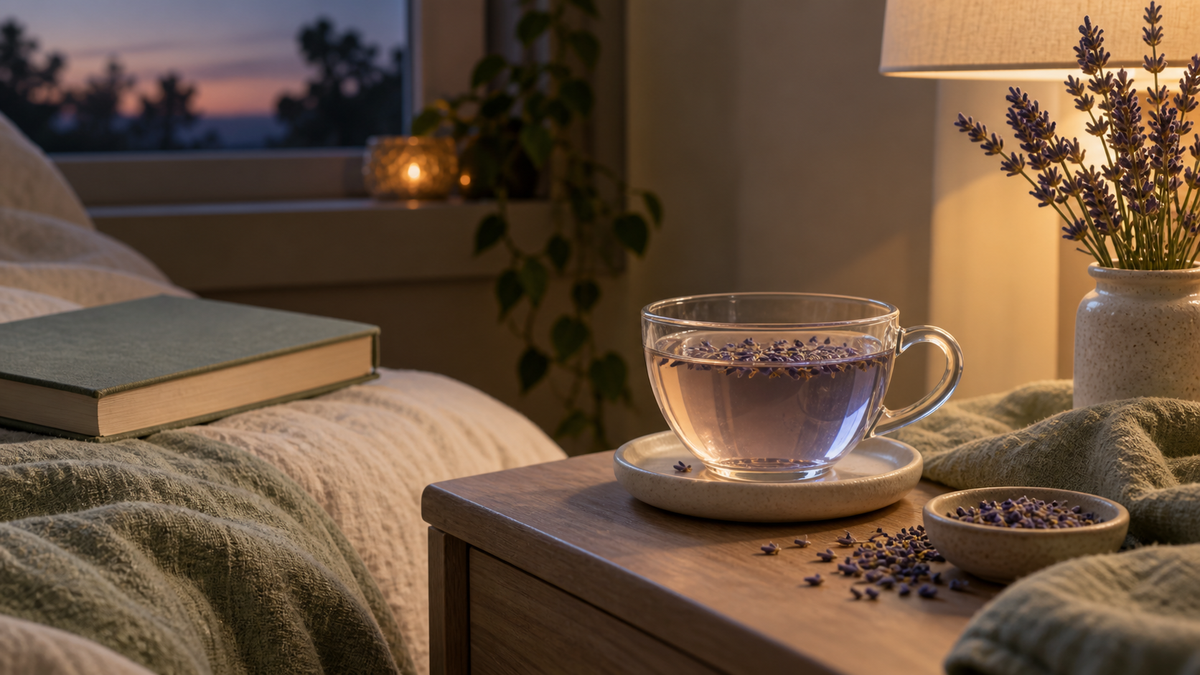
Lavender may support a relaxing bedtime ritual, but research does not prove that an ordinary cup of lavender tea reliably treats insomnia or stress disorders. Many positive studies examine inhaled aroma or standardized oral lavender oil, not brewed buds. One small lavender-tea study reported short-term changes in postnatal women, but its findings are preliminary and not universal.
The honest answer is therefore neither “lavender does nothing” nor “one cup guarantees sleep.” Aroma, warmth, expectation and a consistent wind-down routine can all shape the experience, while persistent sleep or anxiety symptoms may need professional assessment.
Why is the evidence easy to misunderstand?
“Lavender” can describe several very different interventions:
- Dried culinary buds infused in water
- Inhaled essential-oil aroma
- Topical oils or creams
- Standardized oral lavender-oil capsules
- Massage or footbath routines that include lavender
These methods deliver different compounds in different amounts. A result from a defined 80 mg oral oil capsule cannot be translated into teaspoons of tea, and an aromatherapy study cannot show what swallowing an infusion does.
What does research say about lavender tea specifically?
A small study of 80 postnatal women with poor sleep instructed one group to drink lavender tea while taking time to appreciate its aroma daily for two weeks. Some self-reported outcomes improved immediately after the intervention, but the groups were similar at a later follow-up. The participants and combined tea-plus-aroma ritual limit how broadly the finding can be applied.
NCCIH describes evidence for lavender tea and some oral preparations as preliminary and says more high-quality research is needed. That is a useful summary: lavender tea remains a pleasant food ritual, not an established insomnia treatment.
What about lavender aromatherapy?
Systematic reviews cover many inhalation studies, but their designs, populations and quality vary. Some report improvements in anxiety or sleep measures; others leave uncertainty about the size and reliability of the effect. Smelling steam from a cup is not the same protocol as a measured aromatherapy exposure.
What about oral lavender-oil capsules?
Some trials of a standardized proprietary oral lavender-oil product report improvements in anxiety measures. That product is concentrated and manufactured to a specification. It should not be confused with lavender essential oil casually added to water or with a culinary-bud infusion.
Do not swallow essential oil from an aromatherapy bottle. Only use products for the route and purpose stated on their label, and discuss medicinal products with an appropriate professional.
Can a lavender tea ritual still be useful?
Yes, as a behaviour rather than a promise. A caffeine-free drink can replace a late caffeinated beverage. Preparing it slowly can mark the transition from work to rest. Its aroma may feel personally calming, and a repeated low-stimulation routine can support good sleep habits.
A sensible 20-minute evening ritual
- Dim bright overhead lights and put stimulating work away.
- Brew ½ teaspoon culinary lavender buds for 4–5 minutes.
- Strain fully and keep the portion modest.
- Sit somewhere comfortable without scrolling.
- Notice aroma, warmth and flavour without expecting sedation.
- Keep a consistent bedtime and wake time where practical.
A large mug immediately before bed may cause nighttime bathroom trips. If reflux is an issue, avoid drinking close to lying down.
Who should be cautious?
NCCIH notes that food amounts are likely safe for many people, but oral lavender products can cause digestive or other adverse effects. There are theoretical concerns about combining lavender with sedative medicines or herbs, and little is known about regular use during pregnancy or breastfeeding. Ask a clinician when these situations apply.
When is sleep trouble more than a tea question?
Seek professional advice when poor sleep is persistent, severely affects daytime function, involves loud snoring or breathing pauses, follows a major mood change, or occurs with unsafe sleepiness. Anxiety, depression and other conditions deserve proper care. Tea can be part of comfort, but should not delay evaluation.
Stress, anxiety and insomnia are not interchangeable outcomes
Stress can describe a response to circumstances, anxiety can be a temporary feeling or a clinical disorder, and insomnia is defined by persistent difficulty sleeping with daytime impact. A study that improves a short anxiety questionnaire has not automatically demonstrated an insomnia treatment. Headlines often blur these categories.
Subjective sleep quality is also different from sleep duration measured with equipment. Both can matter, but they answer different questions. When a study combines lavender with massage, breathing, a footbath or quiet time, the whole routine—not only the plant—may contribute to the result.
What a future strong lavender-tea trial would need
It would identify the species and dose, standardise brewing, use a credible comparison drink, enrol enough participants, track adverse events and measure outcomes beyond an immediate self-report. Independent replication and longer follow-up would make conclusions more dependable. Until then, a culinary cup belongs in the category of optional supportive ritual.
Frequently asked questions
How long before bed should I drink lavender tea?
There is no clinically proven timing rule. Many people choose 30–60 minutes before bed as part of a wind-down routine, while keeping the serving small enough to avoid sleep disruption.
Will lavender tea make me drowsy?
It does not produce a predictable sedative effect in every person. Do not test a new product immediately before driving or operating equipment if you are unsure how you respond.
Can I mix lavender with chamomile?
They can be combined for flavour, but both have their own cautions. Start with small amounts and check for daisy-family allergy concerns before using chamomile.
Can lavender replace sleeping medicine?
No. Do not stop or change prescribed medicine without the prescriber’s guidance.
Does stronger lavender tea work better?
No reliable evidence establishes that. A strong cup is more likely to taste soapy or cause discomfort.
Reference sources
- NCCIH: Lavender evidence and safety
- Small study of lavender tea in sleep-disturbed postnatal women
- Critical review of lavender and sleep evidence
- Systematic review and meta-analysis of lavender and anxiety
Continue exploring Lavender Flower Tea
Ready to make your own cup? View Sendriya Life Lavender Flower Tea – 50g for the current ingredient declaration, pack information and availability.
This article provides general food and wellness information. It is not medical advice and does not replace care from a qualified health professional.


