

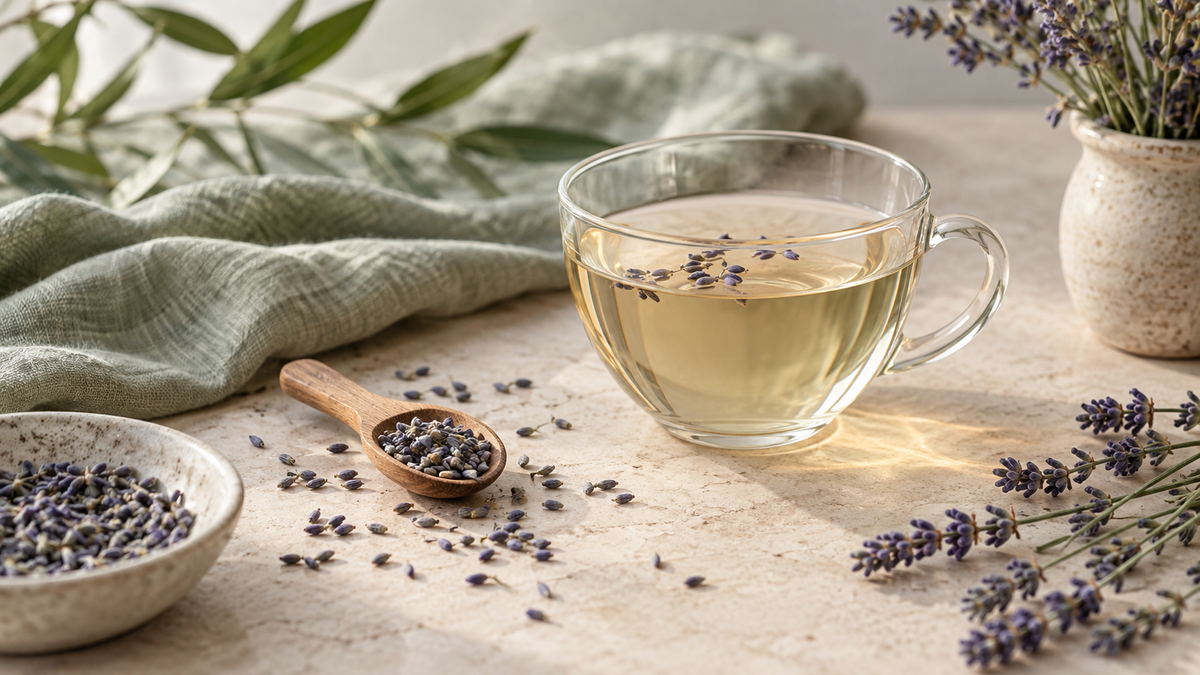
Lavender tea is a naturally caffeine-free herbal infusion with a floral, lightly minty aroma and a gently bittersweet finish. A good cup should smell fresh and botanical, not like soap. Use clearly labelled food-grade buds—often English lavender, Lavandula angustifolia—and brew sparingly because lavender’s aromatic oils become overpowering when too much is used.
Lavender is one of those ingredients where restraint makes the difference between elegant and perfumed. It can be beautiful on its own, but it also works in small amounts with lemon, honey, mint, chamomile or black tea.
What is lavender tea?
Lavender tea is made by steeping dried edible lavender buds in hot water. Because the ingredient is not the tea plant, Camellia sinensis, the drink is technically a tisane. The infusion is usually very pale—straw, light gold or nearly clear—not purple.
The botanical identity matters. Sendriya Life’s current ingredient declaration identifies Lavandula angustifolia, commonly called English or true lavender. Several lavender species and hybrids exist, and their aroma profiles differ.
What does lavender tea taste like?
Well-brewed lavender is floral and herbaceous, with suggestions of mint, rosemary and soft wood. It may have a mild bitterness or camphor-like edge. It should not need to taste sugary, and a natural infusion will not taste like artificial “lavender flavour.”
| Brew style | Likely character | Adjustment |
|---|---|---|
| Light | Soft floral aroma, pale cup | Ideal starting point |
| Balanced | Floral, herbal, faintly bittersweet | Add lemon or honey only after tasting |
| Too strong | Soapy, medicinal or sharply perfumed | Dilute and use fewer buds next time |
Does lavender tea contain caffeine?
Pure lavender buds are naturally caffeine-free. A blend may not be: lavender is often paired with black, green or white tea, all of which naturally contain caffeine. Read the complete ingredient declaration instead of deciding from the word “lavender” on the front.
What does culinary or food-grade lavender mean?
“Food-grade” means the product is supplied for culinary use and handled and labelled accordingly. It does not simply mean that the plant species can be edible. Ornamental lavender from a garden centre, florist or roadside may have been treated with products not intended for food, and decorative potpourri is not tea.
Look for these signals:
- The pack is explicitly sold as food, tea or a culinary ingredient.
- The botanical or common identity is clear.
- There is a proper ingredient declaration and food-business labelling.
- The buds are dry, clean-smelling and protected from moisture.
- The seller provides preparation and storage guidance.
Is English lavender the same as culinary lavender?
Lavandula angustifolia, often called English lavender, is widely used in cooking because its aroma can be relatively sweet and refined. But the species name alone does not prove that a particular bunch is suitable for consumption. It still needs to be grown and handled as a food ingredient.
What is lavandin, and can it taste different?
Lavandin is a hybrid commonly associated with Lavandula × intermedia. It is often more camphoraceous and is widely used in fragrance applications. Some culinary products may use it deliberately, but it can taste stronger. Check the label rather than identifying dried buds by sight alone.
How do you brew a gentle cup?
- Start with about ½ teaspoon dried lavender buds per 200–250 ml cup.
- Add hot water just off a full boil.
- Cover and steep for 4 minutes.
- Strain completely and smell before sipping.
- If too light, extend the next brew slightly; if soapy, reduce the buds.
Unlike a robust black tea, lavender rarely improves through aggressive extraction. Our lavender brewing guide gives exact fixes for perfumed or bitter cups.
Why aroma can tell you more than colour
Lavender’s important sensory compounds are volatile, so a fresh pack should smell recognisably floral and herbal as soon as it is opened. Faded grey-purple colour can occur naturally with age, but a flat aroma often predicts a disappointing cup. Conversely, intensely blue buds are not proof of freshness and may reflect variety, lighting or processing.
Crush only one or two buds between clean fingers to assess them. A sweet floral opening with mild green or camphor notes is expected. Mustiness, damp hay or rancid odours are not. Because lavender readily absorbs surrounding smells, keep it away from coffee, masala, incense and household fragrance.
How culinary lavender differs from fragrance products
Potpourri, bath sachets and essential oils are made for different uses and may include non-food ingredients. A beautifully packaged fragrance product is not a pantry ingredient. Culinary lavender should arrive in food-contact packaging with an ingredient statement and preparation guidance.
What should the finished infusion look like?
Usually pale straw, light gold or almost clear. The purple-blue bud colour does not dissolve into a bright purple drink. A naturally pale cup with a clean aroma is normal; adding more buds for colour often produces harsh perfume notes instead. If a product makes a vivid coloured drink, read the label for other flowers or added colouring.
Frequently asked questions
Why is my lavender tea not purple?
Dried lavender buds generally produce a pale infusion. Bright purple tea is not the natural expectation and may reflect other ingredients or colouring.
Can I use fresh lavender from my garden?
Only when the plant is correctly identified, grown without unsuitable treatments and known to be intended for food. When uncertain, use a labelled culinary product.
Is lavender tea the same as lavender essential oil?
No. A dilute infusion of buds and concentrated essential oil are very different preparations. Never add essential oil to tea unless a specific food product is labelled and directed for that use.
Does lavender tea taste sweet?
It is aromatic rather than sugary. Some people perceive a sweet floral aroma, but the liquid may have a gently bitter herbal finish.
How should dried lavender be stored?
Keep it sealed, dry and away from heat, light and strong odours. Discard buds that smell musty or show moisture or mould.
Reference sources
Continue exploring Lavender Flower Tea
- How to brew lavender without a soapy taste
- Lavender, sleep and stress evidence
- Seven culinary lavender ideas
Ready to make your own cup? View Sendriya Life Lavender Flower Tea – 50g for the current ingredient declaration, pack information and availability.
This article provides general food and wellness information. It is not medical advice and does not replace care from a qualified health professional.


