

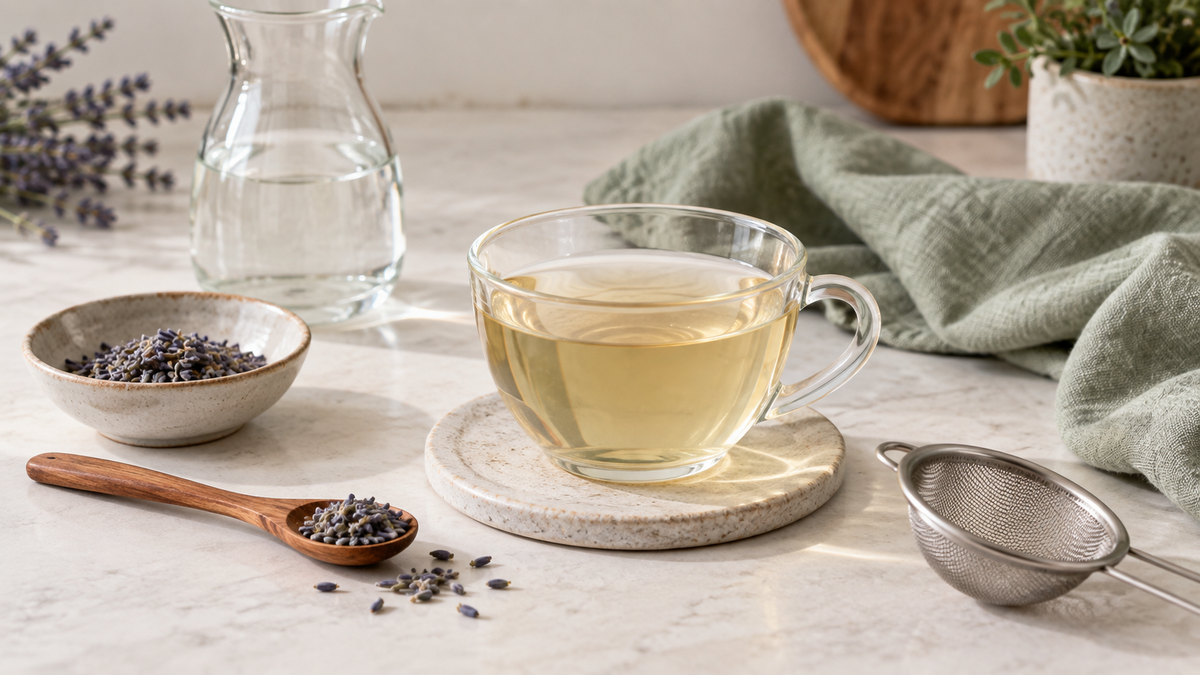
To keep lavender tea delicate rather than soapy, start with about ½ teaspoon of dried culinary lavender buds in 200–250 ml hot water and steep for 4 minutes. Strain completely, then adjust the next cup—not the current one—with a little more time only if needed. Too many buds are the usual cause of a perfumed or medicinal taste.
Lavender is powerful by aroma, so visual volume can be misleading. A small spoonful may look insufficient beside large-leaf tea, yet release more fragrance than expected.
The reliable one-cup lavender tea recipe
Ingredients
- ½ teaspoon food-grade dried Lavandula angustifolia buds
- 200–250 ml fresh drinking water
- Optional after brewing: honey or lemon
Method
- Bring fresh water to a boil, then let it settle briefly.
- Place the lavender in a cup or infuser with enough room for water to circulate.
- Pour over the hot water and cover to retain aroma.
- Steep for 4 minutes.
- Strain every bud. Smell and sip before adding sweetener.
Sendriya Life’s current pack direction is approximately ½ teaspoon with hot water for 4–5 minutes. Treat that as the centre point, then fine-tune for your cup size and palate.
Why does lavender tea taste soapy?
Lavender contains aromatic compounds that also appear in fragrance traditions. When the infusion is too concentrated, the brain may associate the powerful floral-camphor aroma with soap or perfume. The usual causes are too much flower, too little water, a long steep or a strongly camphoraceous lavender type.
The fix is dilution, not a large spoonful of sugar. Add hot water until the aroma becomes gentle. On the next brew, halve the flower quantity and keep the time short.
Should you use boiling water?
Freshly boiled water works, but allowing the bubbling to settle briefly can make the process easier to control. Temperature is less important than ratio and time for preventing a perfumed cup. Do not simmer the buds hard for a standard tea.
Should lavender tea be covered while steeping?
Covering the cup helps retain volatile aroma. That does not mean steeping indefinitely: set a timer and strain on time. A lid also keeps kitchen odours from entering a delicate infusion.
How to make a pot for two
Use about 1 teaspoon of dried buds for 450–500 ml water and steep for 4 minutes. Do not keep the flowers sitting in the pot while drinking the first cup; strain the entire batch so the second cup does not become much stronger.
How to make iced lavender tea
- Steep ½ teaspoon lavender in 150 ml hot water for 4 minutes.
- Strain and cool briefly.
- Pour over a full glass of ice.
- Add chilled water or lemon to taste.
Avoid doubling the buds simply because the drink will be iced. Lavender’s aroma can intensify unpleasantly before ice has a chance to dilute it.
Good pairings and starting ratios
| Pairing | Starting point per cup | Result |
|---|---|---|
| Lavender + chamomile | ¼ tsp lavender + 1 tsp chamomile | Soft floral evening infusion |
| Lavender + black tea | A pinch + normal tea portion | Fragrant, caffeinated blend |
| Lavender + lemon | Plain brew + small squeeze | Brighter, fresher finish |
| Lavender + mint | ¼ tsp + a few mint leaves | Cool herbal character |
Troubleshooting lavender tea
- Soapy or perfumed: dilute; use fewer buds next time.
- Bitter: shorten the steep and check whether other ingredients are responsible.
- Weak aroma: confirm the buds are fresh and stored airtight before increasing the dose.
- Dusty texture: use a finer strainer and avoid crushing the buds.
- Unexpected purple colour: review the ingredient list for colourants or other flowers.
Why weighing lavender improves repeatability
Dried buds settle differently in every spoon. If you are refining a recipe, weigh several cups’ worth together on a scale accurate to 0.1 g, divide by the number of cups and record the result. This is more reliable than trying to weigh one extremely small portion on an insensitive kitchen scale.
Do not crush the buds to make them fit a spoon. Crushing releases aroma faster, creates fine sediment and changes extraction. Use a roomy infuser, start the timer when the water meets the buds and remove the infuser completely at the end.
How cup material affects perception
A clean glass or glazed ceramic cup is neutral and easy to rinse. Porous vessels and reusable filters can hold coffee, detergent or spice aromas that make lavender seem soapier than it is. Rinse thoroughly without strongly scented washing residue and smell the empty warm cup before blaming the tea.
If a corrected light brew still tastes unpleasant, the variety or batch may simply not suit your palate. Brewing skill cannot turn every aromatic profile into one you enjoy.
Frequently asked questions
Can I re-steep lavender buds?
You can, but the second cup will usually be light. Use fresh hot water and a short steep; discard the wet buds afterward rather than storing them at room temperature.
Can I boil lavender with milk?
A pinch can flavour a milk recipe, but long boiling can become perfumed. Infuse briefly, strain well and use a recipe designed for the milk you choose.
Does more lavender make tea more calming?
No dependable dose-response rule supports that assumption for home-brewed tea. More often, it simply makes the cup unpleasant and may increase the chance of side effects.
Can I grind the buds first?
Grinding increases surface area and makes fine particles harder to strain. Whole buds give more control.
Why does my lavender tea taste different each time?
Spoon size, cup volume, water, steep time and bud freshness all vary. Measure both the buds and water, then change only one variable.
Reference source
Continue exploring Lavender Flower Tea
- Lavender taste, caffeine and food grade
- Lavender, sleep and stress evidence
- Seven culinary lavender ideas
Ready to make your own cup? View Sendriya Life Lavender Flower Tea – 50g for the current ingredient declaration, pack information and availability.
This article provides general food and wellness information. It is not medical advice and does not replace care from a qualified health professional.


