

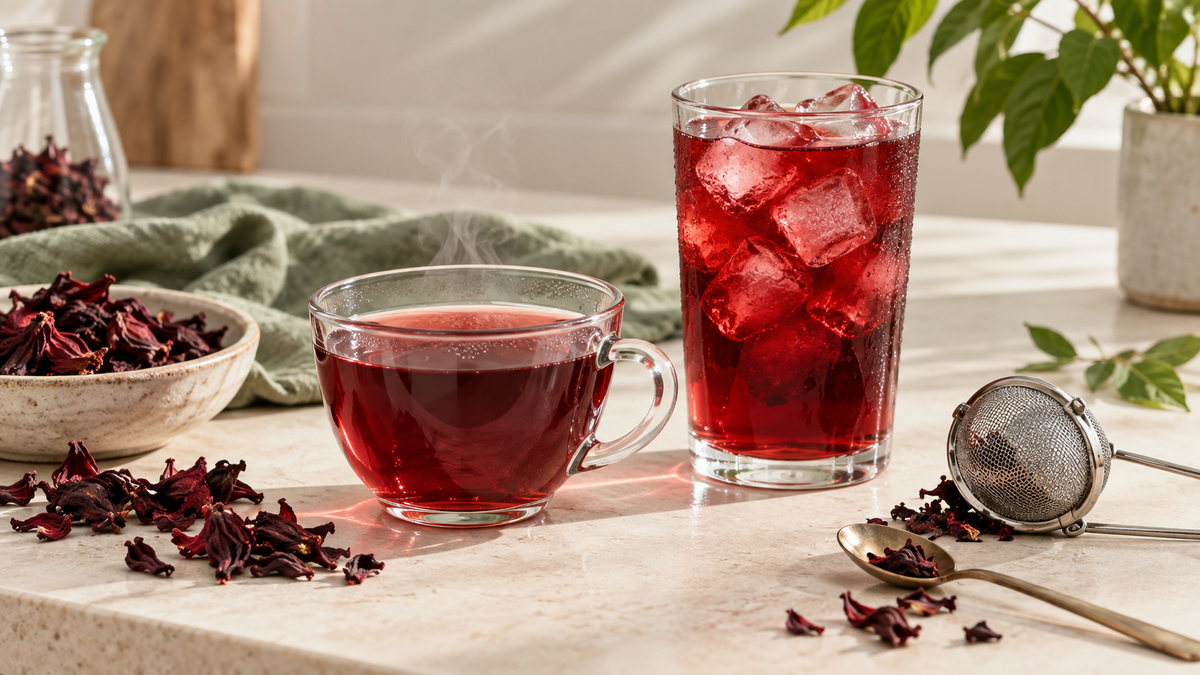
For a balanced hot cup, steep about 1 teaspoon of dried hibiscus in 200–250 ml freshly boiled water for 5–7 minutes, then strain. For iced tea, cool a slightly stronger infusion over plenty of ice. For cold brew, steep the flowers in covered water inside the refrigerator—not on the counter—then strain and keep chilled.
Hibiscus is naturally tart, so brewing is less about extracting “as much as possible” and more about finding the acidity you enjoy. Ratio, time and dilution are the three controls that matter most.
What equipment do you need?
- A measuring teaspoon or small digital scale
- A heat-safe cup, teapot or lidded jar
- A fine strainer
- Fresh drinking water
- A clean refrigerator-safe container for cold brew
Glass lets you see the infusion develop, but any clean, non-reactive vessel works. Hibiscus pigments may stain porous material, so rinse equipment soon after use.
Hot hibiscus tea recipe
Ingredients for one cup
- 1 teaspoon dried hibiscus flowers
- 200–250 ml freshly boiled water
- Optional: sweetener, ginger, cinnamon or citrus added after tasting
Method
- Warm the cup or teapot with a little hot water, then discard it.
- Add the dried hibiscus.
- Pour over the freshly boiled water and cover.
- Steep for 5 minutes, taste, and continue to 7 minutes if you want more intensity.
- Strain fully. Dilute if too tart; sweeten only after adjusting strength.
Quick iced hibiscus tea
Ice dilutes a hot infusion, so use roughly 1½ teaspoons of hibiscus with 150 ml hot water. Steep 5–7 minutes, strain, then pour over a full glass of ice. Add chilled water until the acidity feels balanced.
Cooling can make tartness feel especially crisp. A small amount of orange, mint or ginger can round the drink without covering its floral-fruity character. If adding lemon, taste first: hibiscus is already acidic.
Refrigerator cold-brew hibiscus tea
Cold extraction can taste smoother and less immediately sharp than a concentrated hot brew.
- Combine 4 teaspoons dried hibiscus with 1 litre clean cold water.
- Cover and refrigerate for 6–10 hours.
- Strain into a clean bottle.
- Taste and dilute if needed.
- Keep refrigerated and use promptly; discard it if the smell, appearance or taste becomes unusual.
Do not leave a cold infusion steeping at room temperature for many hours. The refrigerator method offers better temperature control, but clean hands, utensils and bottles still matter.
Which method should you choose?
| Method | Time | Character | Best for |
|---|---|---|---|
| Hot | 5–7 minutes | Full aroma and brisk tartness | Immediate drinking |
| Hot then iced | About 10 minutes | Bright and refreshing | Fast iced tea |
| Refrigerator cold brew | 6–10 hours | Smooth, gradual extraction | Make-ahead pitcher |
How to fix a cup that tastes too sour
- Dilute first: add hot or cold water a little at a time.
- Shorten the next steep: stop at 4–5 minutes.
- Use fewer flowers: reduce the ratio rather than relying on sweetener.
- Add sweetness carefully: a small amount balances acidity; too much hides the tea.
- Pair thoughtfully: orange, cinnamon and apple create a rounder perception.
Why does hibiscus tea sometimes taste bitter?
Hibiscus is primarily sour and astringent, but an excessive amount, a very long steep, scorched additions or low-quality blended ingredients can create bitterness. Clean the brewer, use fresh water and test the plain flower by itself before blaming the garnish.
Can you re-steep hibiscus?
You can try a second infusion, but it will usually be paler and lighter. Use fresh hot water and drink it promptly. Re-steeping is a matter of taste, not a way to guarantee the same composition as the first cup.
How to scale hibiscus tea for a pitcher
For a one-litre hot-brewed pitcher, begin with 4 teaspoons of dried hibiscus. Steep in about 700 ml hot water for 5–7 minutes, strain, then add chilled water and ice to reach one litre. This approach leaves room for dilution and is easier to correct than a harsh concentrate.
For a gathering, prepare the unsweetened base first and serve sweetener separately. Guests experience tartness differently, and fruit juice or ice will change the balance. Keep the pitcher covered and chilled; do not repeatedly return a warm, half-used drink to the refrigerator.
Three simple variations
- Ginger-orange: infuse a thin ginger slice, then add orange peel after straining.
- Mint-lime: cool the tea before adding mint; add lime gradually because hibiscus is already acidic.
- Apple-cinnamon: steep a small cinnamon piece and finish with unsweetened apple juice.
These are serving ideas, not preservation methods. Fresh fruit, juice and herbs can shorten refrigerated life, so make small batches and use clean utensils.
When should you sweeten hibiscus?
Sweeten only after straining and adjusting dilution. Sugar dissolves fastest while the tea is warm, but adding it before tasting can hide an overly concentrated brew. For a cold pitcher, dissolve a measured amount in a small warm portion, blend it back, chill and taste again. Cold drinks can seem less sweet, so final adjustment should happen at serving temperature.
Frequently asked questions
Should hibiscus tea be boiled?
Pouring boiled water over the flowers is sufficient for a cup. Prolonged simmering creates a concentrated decoction that can become very sour. If a recipe calls for simmering, watch the ratio and plan to dilute.
Can I add milk?
Hibiscus is acidic and can curdle dairy milk. If you want a creamy drink, use a recipe developed for an acid-tolerant plant-based option and add it gradually.
How much hibiscus should I use for a litre?
Begin with about 4 teaspoons per litre, then adjust after tasting. A party concentrate may use more, but should be diluted before serving.
Why did my tea turn dull or brown?
Old material, prolonged heat, light exposure, water chemistry or reactive cookware can affect the pigments. Store the dried flowers airtight, dry and away from light.
Can I make it the night before?
Yes. Prepare with clean equipment, chill promptly in a covered bottle and keep refrigerated. Make only what you can use while it remains fresh.
Reference sources
- Review of hibiscus composition and studied health outcomes
- Review of hibiscus use, safety and labelling
Continue exploring Hibiscus Flower Tea (Gudhal)
Ready to make your own cup? View Sendriya Life Hibiscus Flower Tea (Gudhal) – 100g for the current ingredient declaration, pack information and availability.
This article provides general food and wellness information. It is not medical advice and does not replace care from a qualified health professional.


