

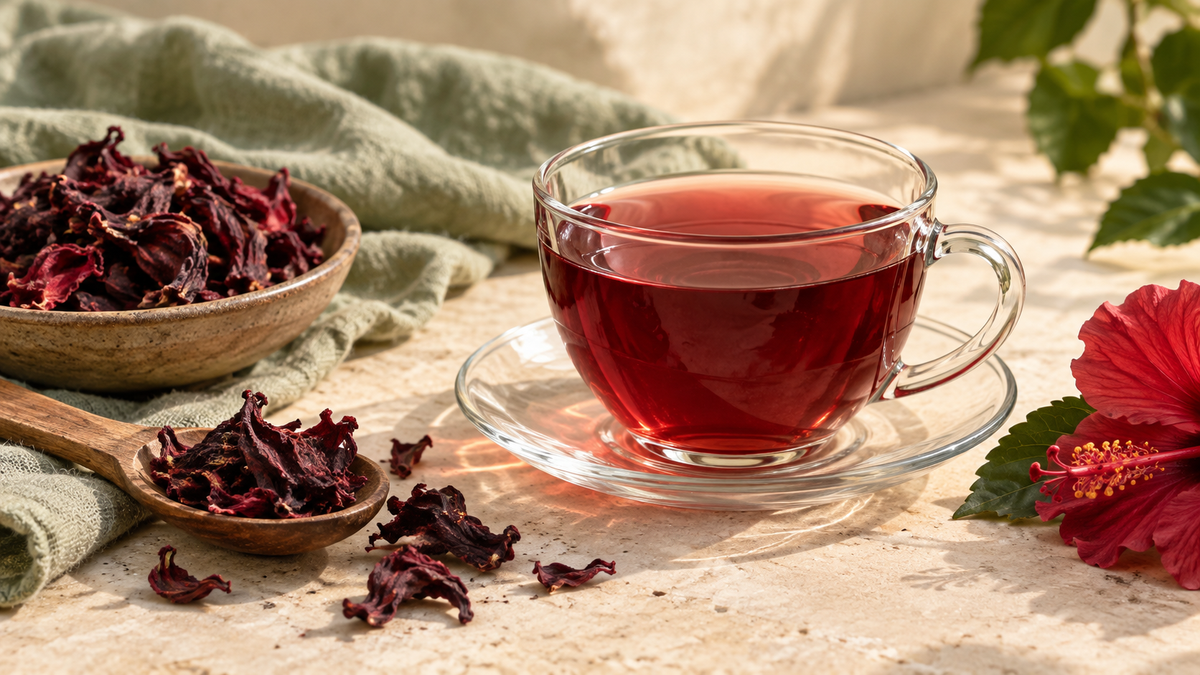
Hibiscus tea is a naturally caffeine-free herbal infusion with a vivid ruby colour and a brisk, cranberry-like tartness. Often searched for in India as Gudhal tea, it is brewed from dried hibiscus flower material rather than tea leaves. It can be served hot, chilled or over ice, and its sharp flavour is easy to soften with water, fruit or a little sweetener.
The bright cup makes hibiscus look intense, but colour and strength are not the same thing. A carefully brewed infusion can be jewel red and pleasantly tangy; an over-steeped one may become puckering or harsh. Understanding the ingredient and the brew ratio is the simplest route to a balanced cup.
What is hibiscus tea?
Hibiscus is a large plant genus. Food and drink products commonly use the fleshy red calyces associated with Hibiscus sabdariffa, also known in different places as roselle, karkade or bissap. “Gudhal” is a familiar Hindi name for hibiscus, but local naming can cover more than one species. For a food product, the ingredient declaration is more dependable than a common name alone.
Hibiscus tea is technically a tisane because it does not come from Camellia sinensis, the plant used for black, green, white and oolong tea. Dried hibiscus releases organic acids and red-purple anthocyanin pigments into water, producing its characteristic tang and colour.
What does hibiscus tea taste like?
Expect a clean tartness reminiscent of cranberry, red currant or sour cherry, followed by a light floral-fruity note. It is usually more acidic than chamomile, rose or butterfly pea tea. The experience changes with concentration, temperature and serving style.
- Light brew: refreshing, gently tangy and easy to sip without sweetener.
- Standard brew: vivid, fruit-forward and mouth-watering.
- Strong or long brew: deeper red, more drying and distinctly sour.
- Chilled brew: crisp and punchy, especially with citrus or mint.
Does hibiscus tea contain caffeine?
Pure dried hibiscus does not naturally contain caffeine. That makes it useful when you want a colourful evening drink or an alternative to black tea. Always read the full ingredient list, however: a hibiscus blend can include black tea, green tea, yerba mate or another caffeine-containing ingredient.
Why is hibiscus tea red?
The red colour comes largely from anthocyanins, a family of plant pigments. The exact shade varies with plant material, water chemistry, acidity, concentration and storage. Acidic additions such as lemon can make the colour appear brighter. Prolonged heat, light and poor storage can dull it.
A darker cup is not automatically “more beneficial.” Colour is a useful sensory clue, not a clinical dose meter. Brew for a flavour you enjoy rather than chasing the deepest possible red.
How is Gudhal tea different from ordinary tea?
| Feature | Pure hibiscus infusion | Black or green tea |
|---|---|---|
| Plant source | Hibiscus flower material | Camellia sinensis leaves |
| Caffeine | Naturally caffeine-free | Usually contains caffeine |
| Main taste | Tart, fruity, floral | Varies from grassy to malty |
| Colour | Ruby to burgundy | Pale gold to amber-brown |
What is the easiest way to brew hibiscus tea?
- Use about 1 teaspoon of dried hibiscus for one 200–250 ml cup.
- Add freshly boiled water.
- Steep for 5–7 minutes.
- Strain completely and taste before adding anything.
- If it is too tart, dilute with warm water instead of masking an over-strong brew.
For iced tea, brew slightly stronger only if melting ice will dilute it. For cold brew, steep in clean cold water in the refrigerator and keep preparation and storage hygienic. Our complete hot and cold hibiscus brewing guide covers ratios and troubleshooting.
What pairs well with hibiscus?
Hibiscus works naturally with ginger, cinnamon, mint, orange, lemon, apple and berries. Sweetness rounds its acidity, while a tiny pinch of salt can make fruit flavours seem fuller in a chilled drink. Add one flavour at a time so the flower remains recognisable.
Are hibiscus petals and hibiscus calyces the same?
Everyday language often calls the dried red pieces “flowers,” but beverages commonly use the fleshy calyx surrounding the seed pod of roselle. That is why dried hibiscus may look like curled, thick burgundy pieces rather than flat decorative petals. The distinction helps explain why an ornamental hibiscus from a garden does not necessarily match a food-tea product.
Why does hibiscus have so many names?
Gudhal, roselle, karkade, bissap and sorrel are used in different regions and culinary traditions. Some names can also refer to other plants or drinks, so check the botanical and ingredient information when identity matters. Recipes from different countries may vary widely in spice, sugar and concentration even when the base plant is similar.
When buying dried hibiscus, choose material sold as food, with a clean tart-fruity aroma and no dampness. Rich burgundy colour is common, but natural variation is expected. Store it tightly sealed because moisture and light can dull both flavour and pigments.
Frequently asked questions
Is Gudhal tea the same as hibiscus tea?
Gudhal is a common Indian name for hibiscus. Because the word can refer broadly to hibiscus flowers, check the product’s food label and botanical information rather than assuming every ornamental Gudhal flower is intended for brewing.
Can children drink hibiscus tea?
Do not assume that caffeine-free means suitable for every child. Ask a paediatric professional about regular use, especially for young children or those taking medicine.
Does hibiscus tea stain?
Its strong pigments can mark pale fabric, porous countertops and some cups. Rinse spills promptly and use non-porous drinkware.
Can I drink hibiscus without sugar?
Yes. Start with a lighter brew, chill it well, or pair it with naturally aromatic ingredients such as orange peel or mint if the tartness feels sharp.
Is hibiscus tea a substitute for prescribed treatment?
No. Hibiscus has been studied for health outcomes, but an everyday infusion should not replace prescribed medicine or clinical monitoring.
Reference sources
- Systematic review and meta-analysis of hibiscus and cardiometabolic markers
- Review of hibiscus safety, labelling and potential interactions
Continue exploring Hibiscus Flower Tea (Gudhal)
Ready to make your own cup? View Sendriya Life Hibiscus Flower Tea (Gudhal) – 100g for the current ingredient declaration, pack information and availability.
This article provides general food and wellness information. It is not medical advice and does not replace care from a qualified health professional.


