

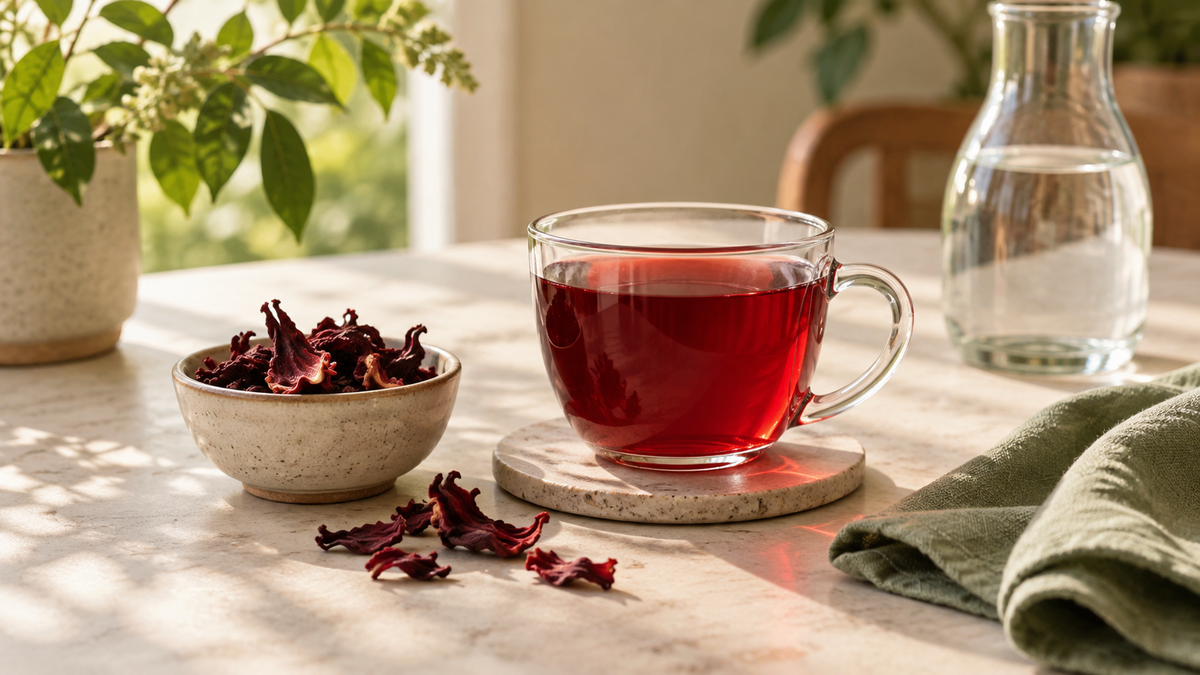
Many healthy adults can enjoy a moderate cup of food-grade hibiscus tea, but “safe every day” is not universal. Regular use needs more care if you are pregnant or breastfeeding, have low blood pressure, take blood-pressure or blood-sugar medicine, or experience dizziness or digestive discomfort. Start mild and discuss frequent use with a clinician when health conditions or medicines are involved.
Hibiscus is a food and beverage ingredient with a long culinary history, yet daily exposure is different from an occasional festive drink. Frequency, strength, product identity and personal health all shape the answer.
What is a sensible everyday serving?
There is no single medically established daily dose for every hibiscus tea product. A practical food-first approach is one modest cup brewed according to its label, rather than a concentrated decoction or multiple strong servings. Sendriya Life’s current brewing direction is about 1 teaspoon in a cup of hot water for 5–7 minutes.
More concentrated does not automatically mean more useful. Stronger tea supplies more acidity and plant compounds, may taste harsher and makes it harder to know what caused a symptom.
Who should ask before drinking hibiscus regularly?
- People taking blood-pressure medicine: hibiscus has been studied for pressure-lowering effects, so additive effects are a reasonable concern.
- People with naturally low blood pressure or fainting: regular intake may not suit everyone.
- People taking blood-sugar medicine: discuss possible additive effects and monitoring.
- Pregnant or breastfeeding people: food amounts and concentrated routine use are not automatically equivalent; obtain individual advice.
- People preparing for surgery: disclose herbs, teas and supplements during pre-operative review.
- Children: ask a paediatric professional before making it a regular drink.
Can hibiscus tea irritate the stomach?
Its organic acids give it a refreshing tang, but can feel sharp to people with reflux, sensitive teeth or a sensitive stomach. A lighter brew, smaller portion and drinking it with food may be more comfortable. If symptoms recur, stop rather than repeatedly masking them.
Frequent acidic drinks can also expose teeth to acid. Avoid swishing the tea around the mouth, consider rinsing with plain water afterward and do not brush immediately after an acidic drink.
Can it make blood pressure too low?
Hibiscus interventions have lowered average blood pressure in some trials. That does not mean a predictable effect from every cup, but it gives a reason for caution with antihypertensive medicines or low baseline pressure. Dizziness, unusual weakness, faintness or blurred vision are signals to stop and seek advice.
Is hibiscus safe in pregnancy?
Reliable human safety evidence for regular concentrated hibiscus use during pregnancy is limited. “Natural” and “caffeine-free” do not prove pregnancy safety. The careful answer is to ask your obstetric clinician before making hibiscus a routine drink; do not use it to address swelling, blood pressure or another pregnancy symptom on your own.
What should you check on the product?
- It is sold as food or tea, not picked from an ornamental or chemically treated plant.
- The ingredient declaration is clear.
- The flowers smell clean and characteristic, with no damp or musty odour.
- The pack is intact and stored away from moisture, heat and light.
- You follow the stated preparation and storage directions.
What symptoms mean you should stop?
Stop and get appropriate help for hives, swelling, breathing difficulty, fainting or another possible severe reaction. For less urgent but repeatable symptoms—such as stomach pain, nausea, dizziness or worsening reflux—stop the tea and discuss the pattern with a healthcare professional.
A safer way to introduce hibiscus
- Choose a single-ingredient, food-grade product.
- Brew a light cup according to the label.
- Try it at a time when you can notice how you feel.
- Do not introduce several new herbs or supplements on the same day.
- If you tolerate it and want frequent use, keep the preparation consistent.
How to build a consistent, moderate routine
Use the same cup, spoon and steep time so your daily drink does not unknowingly become twice as strong. Keep a simple note of timing and symptoms if you are evaluating tolerance. Change only one factor at a time—flower quantity, sweetener or serving temperature—so a reaction is easier to interpret.
Daily hibiscus can also become a hidden sugar source when its tartness is balanced with syrup. Measure sweetener rather than pouring freely, or use dilution and fruit aroma to soften the cup. For teeth, avoid sipping an acidic drink continuously over many hours; finish the serving and rinse with plain water.
What “daily” should never mean
It should not mean replacing water with strong hibiscus concentrate, using the tea to chase a lower blood-pressure number or ignoring dizziness because the drink is “natural.” A routine is reasonable only when it remains enjoyable, moderate and compatible with your health plan.
Frequently asked questions
Can I drink hibiscus tea at night?
Pure hibiscus is caffeine-free, but its acidity and the volume of liquid may be uncomfortable near bedtime for some people. It is not a sleep treatment.
Can I drink hibiscus on an empty stomach?
Some people can; others find the tartness irritating. Begin with a mild cup alongside or after food if you are sensitive.
Is cold-brew hibiscus safer than hot tea?
Cold and hot brewing create different sensory profiles, not a universal safety hierarchy. Cold brew must be made with clean equipment, steeped in the refrigerator and kept chilled.
Does adding sugar change safety?
It reduces perceived tartness but adds sugar. Dilution, shorter steeping and aromatic fruit can balance the drink with less sweetness.
Can hibiscus tea “detox” the body?
“Detox” is not a precise clinical outcome for a cup of tea. The liver, kidneys, lungs and digestive system handle normal waste processing; hibiscus should be described as a beverage, not a cleanse.
Reference sources
- Review of hibiscus safety, quality, labelling and interactions
- Systematic review and meta-analysis of studied hibiscus outcomes
Continue exploring Hibiscus Flower Tea (Gudhal)
Ready to make your own cup? View Sendriya Life Hibiscus Flower Tea (Gudhal) – 100g for the current ingredient declaration, pack information and availability.
This article provides general food and wellness information. It is not medical advice and does not replace care from a qualified health professional.


