

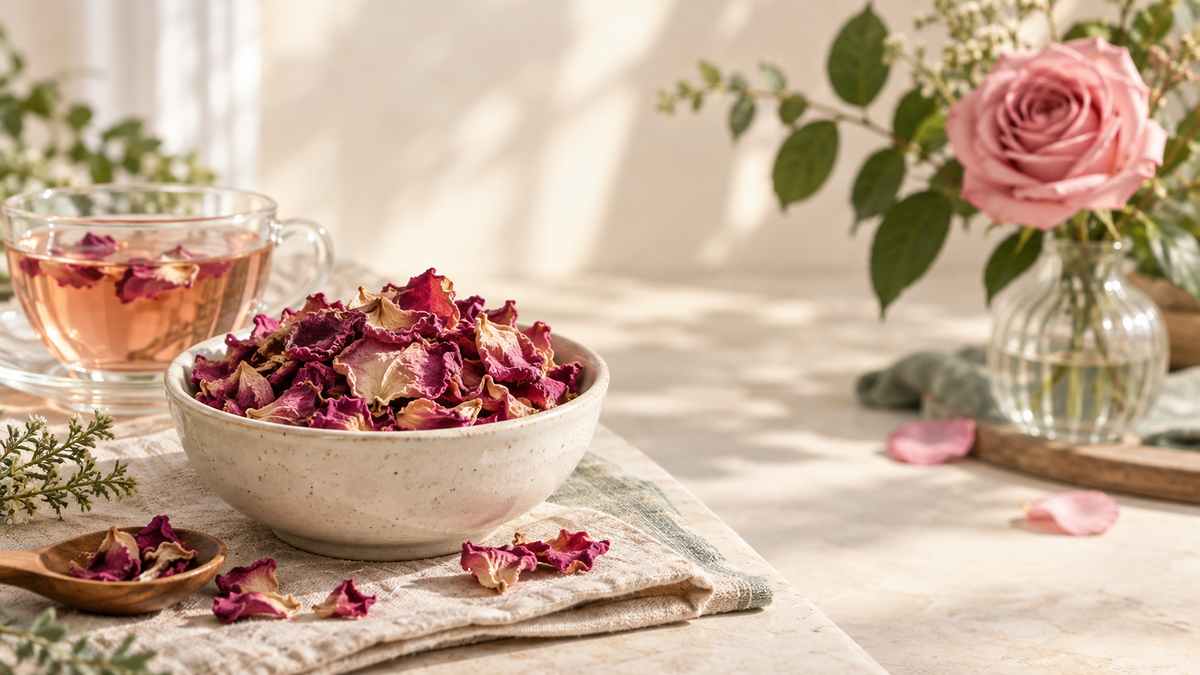
Yes, petals from true roses (genus Rosa) are edible when the flowers are correctly identified, grown and handled for food. Choose petals sold for culinary use, or known food-safe garden roses. Do not eat florist, roadside or decorative petals, and do not rely on washing to make them safe.
This is the central food-safety distinction: a plant can be botanically edible while a particular specimen is unsuitable because of how it was grown, treated, handled or stored.
Can you eat petals from any rose variety?
The Royal Horticultural Society lists true roses as edible, with fragrant varieties often preferred for flavour. Yet common names and appearances are not enough for identifying every plant. If you are uncertain about either the plant’s identity or its treatment history, do not eat it.
Commercial rose-petal tea may list Rosa spp. because edible petals can come from more than one species. Damask rose, Rosa damascena, is prominent in culinary and fragrance traditions, but species alone does not certify a specific flower as food-grade.
Why should you avoid florist roses?
Flowers sold for display are produced for appearance and vase life, not necessarily under food-crop rules. They may receive pesticides, preservatives, dyes or post-harvest treatments whose use on edible petals has not been established. Washing cannot be relied upon to remove every residue. The National Pesticide Information Center explains that no produce-washing method removes all pesticide residues.
The same caution applies to bouquets from supermarkets, wedding decorations and petals sold as craft material or potpourri.
Can you use roses from your own garden?
Home-grown roses may be suitable only when all of the following are true:
- You can identify the plant correctly.
- You know its full pesticide, fungicide and fertilizer history.
- No unsuitable chemical has been applied.
- The flowers are away from traffic spray, pets and contaminated soil or water.
- The petals are fresh, clean and free of disease and insects.
Do not assume “organic-looking” means untreated. If another gardener, landscaper or previous owner managed the plant, the treatment history may be unknown.
What does food-grade rose mean?
Food-grade rose petals are supplied as a food ingredient with appropriate processing, packing and labelling. Look for an ingredient declaration, business details, batch or date information where required, storage directions and an intact food pack. Avoid decorative petals that merely use words such as “natural,” “pure” or “fragrant.”
Can you eat rose petals raw or dried?
Fresh, food-safe rose petals can be eaten raw in salads or used as a garnish after gentle rinsing. Remove any bitter white base. Dried petals must also be intended for food: follow the pack’s preparation directions rather than assuming that a tea ingredient is ready to eat straight from the packet.
Dried petals work well in infusions and cooked recipes. The RHS recommends dried or frozen edible flowers for infusions or cooking.
Simple ways to use edible rose petals
- Tea: use culinary dried petals and follow our hot and iced rose tea guide.
- Cool drinks: try a strained petal infusion in rose nimbu sharbat.
- Sweet dishes: use petals in rose sugar, syrups or cooked desserts, following a recipe suitable for fresh or dried petals.
- Salads and garnishes: use freshly prepared food-safe petals for colour and floral flavour.
Flavour varies with the rose variety. A fragrant petal can be pleasantly floral, while others taste bitter; neither colour nor scent proves that a flower is safe to eat.
Which parts of a rose are used?
Recipes commonly use the petals. The pale white base of a fresh petal can taste bitter and may be trimmed for delicate dishes. Stems, thorns and leaves are not interchangeable with petals. Rosehips are a separate ingredient with different preparation.
How should fresh edible petals be prepared?
- Harvest clean flowers at their freshest, ideally in dry weather.
- Inspect for insects and disease.
- Separate petals from the bitter base and other flower parts if the recipe calls for it.
- Rinse fresh petals gently under clean, cool running water.
- Pat dry and use promptly.
Dried packaged petals should be handled according to the seller’s directions. Introducing water before storage can encourage spoilage.
Can people be allergic to roses?
Edible flowers can cause allergic reactions or stomach upset in some people. If you have a known allergy to roses, avoid them. If you have significant pollen or plant allergies, ask a qualified clinician before trying edible flowers.
Stop eating or drinking the product and seek medical advice if you develop itching, hives or other symptoms of a possible reaction. Sudden swelling of the lips, mouth, tongue or throat, trouble breathing or swallowing, or fainting requires emergency medical help. Do not wait for symptoms to happen again. See the NHS guide to food-allergy symptoms and urgent warning signs.
What about pregnancy, breastfeeding or medicine use?
Occasional culinary exposure and concentrated medicinal use are not the same. Evidence for regular therapeutic quantities of many botanicals can be limited. Ask a qualified clinician before frequent use if you are pregnant, breastfeeding, treating a condition or taking medicine.
A quick decision checklist
| Source | Use in food or tea? | Reason |
|---|---|---|
| Sealed culinary rose-petal pack | Generally appropriate as directed | Sold and labelled for food |
| Known untreated home rose | Possibly, with correct identification and hygiene | History is known |
| Florist bouquet | No | Not grown or handled for eating |
| Roadside or public-garden rose | No | Contamination and treatment unknown |
| Potpourri or craft petals | No | Decorative product, not food |
How to dry known food-safe roses at home
Harvest only correctly identified, untreated roses. Separate clean petals, remove damaged material and spread them in a single layer with good airflow away from direct sun and household contamination. They must become fully crisp-dry before storage; petals that remain pliable can trap moisture.
Transfer the dried petals to a clean airtight container, label the rose and harvest date, and keep it cool and dark. Check the container after a day for condensation. If moisture appears, the batch was not dry enough and should not be sealed for long storage.
Why traceability matters even for flowers
A food-grade pack connects the ingredient to a seller, lot and date information. That makes questions and recalls possible. Loose petals from an unknown online marketplace may look attractive but leave you unable to confirm species, treatment or handling.
When sharing home-grown petals, tell the recipient exactly how the roses were managed. “From my garden” is not a safety specification. People with allergies, pregnancy or health conditions need enough information to make their own decision.
Frequently asked questions
Does washing make florist roses edible?
No. Washing may remove some surface dirt, but cannot establish correct identity or remove every systemic or post-harvest treatment.
Are red roses more edible than other colours?
Colour does not establish food safety. Treatment history, identity and culinary handling matter.
Can I dry my own rose petals?
Yes, when the roses are correctly identified and food-safe. Dry them promptly under hygienic conditions until fully dry, then store airtight away from light and moisture.
Are rose petals safe for pets?
Human culinary guidance does not determine pet safety. Ask a veterinarian, and keep sweetened or blended rose foods away from animals unless specifically approved.
What if dried petals smell musty?
Do not brew them. Mustiness can indicate moisture or spoilage; discard the material.
Reference sources
- Colorado State University Extension: edible flower identification and pesticide cautions
- Royal Horticultural Society: edible flower selection and rose uses
Continue exploring Rose Petal Tea
Ready to make your own cup? View Sendriya Life Rose Petal Tea – 25g for the current ingredient declaration, pack information and availability.
This article provides general food and wellness information. It is not medical advice and does not replace care from a qualified health professional.


