

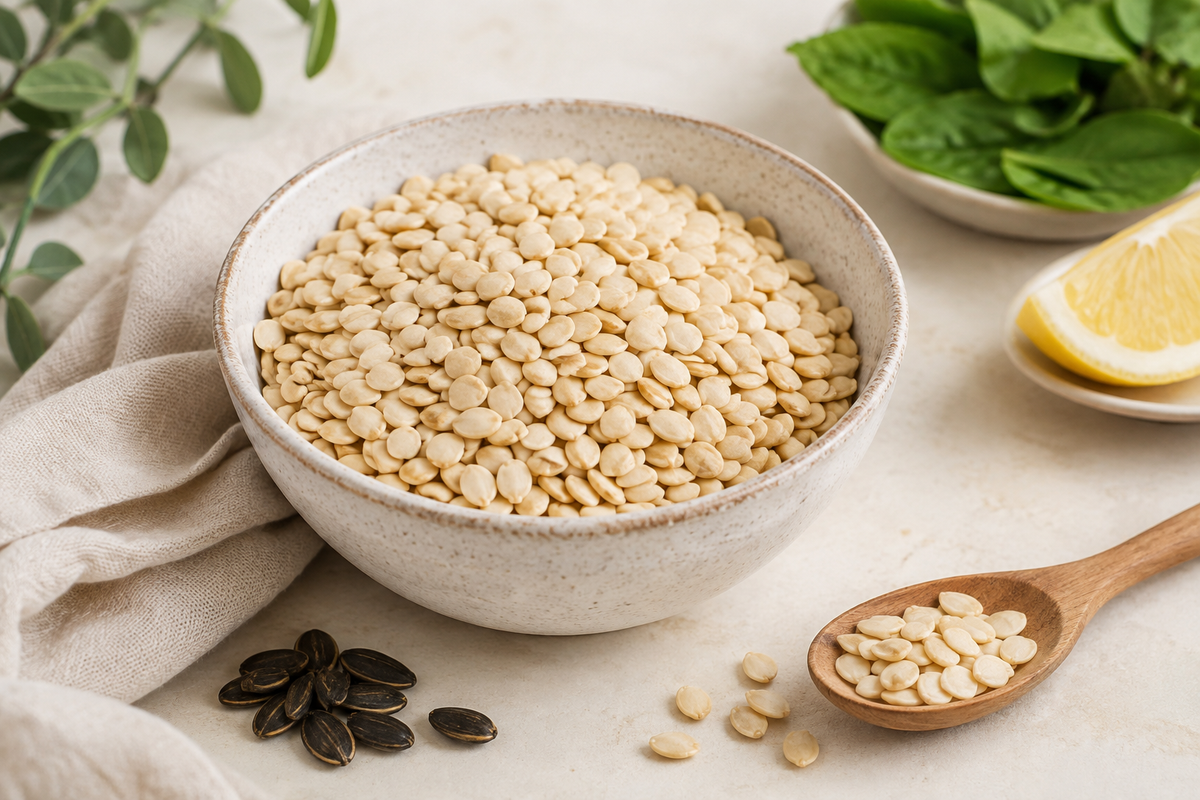
Watermelon seed kernels, or magaz, provide both magnesium and zinc. Magnesium supports normal muscle and nerve function, energy production, bone formation and many enzyme reactions. Zinc supports immune function, DNA and protein synthesis, wound healing, growth and the sense of taste. These are normal nutrient functions—not a promise that one food can prevent or treat a health condition.
The useful way to think about magaz is as one concentrated seed food within a varied diet. It can contribute minerals, protein and fats in a small portion, while dals, vegetables, fruits, whole grains, dairy or alternatives, and other nuts and seeds provide the rest of the nutritional picture.
How much magnesium and zinc do watermelon seed kernels contain?
A USDA reference entry for dried, shelled watermelon seed kernels reports approximately 515 mg magnesium and 10.24 mg zinc per 100 g. A 28 g portion—roughly a small handful—would therefore provide about 144 mg magnesium and 2.9 mg zinc.
These figures are a food-composition reference, not a laboratory result for every packet. Variety, growing conditions, processing, moisture and serving size can change the actual amount. Use the nutrition information on your pack when you need a product-specific value.
Watermelon seed kernels are also energy-dense. The same USDA reference lists about 557 kcal, 28.3 g protein and 47.4 g fat per 100 g. That is why a tablespoon or small handful is more practical than treating 100 g as a routine serving.
What magnesium does in the body
Magnesium is an essential mineral used throughout the body. According to the US National Institutes of Health Office of Dietary Supplements, it is involved in processes that include:
- normal muscle and nerve function;
- making protein, bone and DNA;
- energy production;
- normal blood glucose and blood pressure regulation; and
- movement of calcium and potassium across cell membranes.
Those functions explain why magnesium matters, but they do not mean a magnesium-containing food produces an immediate feeling or fixes a diagnosed deficiency. Nutrient status depends on total intake, absorption, health conditions and sometimes medicines.
How much magnesium do adults need?
The NIH lists recommended daily amounts of 400–420 mg for adult men and 310–320 mg for adult women, with different needs during pregnancy and across age groups. Indian recommendations and an individual’s needs may differ. The practical message is not to chase one exact percentage from one ingredient; it is to eat a pattern that repeatedly includes magnesium-containing foods such as legumes, nuts, seeds, whole grains and green leafy vegetables.
What zinc does in the body
Zinc is required for the activity of many enzymes and for normal cellular processes. Its established roles include:
- supporting normal immune function;
- helping the body make proteins and DNA;
- supporting normal growth and development;
- helping wounds heal; and
- contributing to the normal sense of taste.
Again, “supports immune function” describes what zinc does as an essential nutrient. It does not mean eating magaz can cure an infection or replace medical care.
How much zinc do adults need?
The NIH reference amounts are 11 mg a day for adult men and 8 mg for adult women, with higher amounts during pregnancy and breastfeeding. A small serving of watermelon seed kernels can contribute to that total, but absorption from plant foods varies.
Why zinc on paper is not the same as zinc absorbed
Nuts, seeds, beans and whole grains contain phytates. These compounds can bind some zinc in the digestive tract, which reduces the fraction absorbed. That does not make plant foods “bad” or zinc-free. It simply means that the mineral number in a food table is not identical to the amount the body ultimately uses.
People eating fully plant-based diets may need to pay closer attention to zinc-rich foods and overall dietary variety. Soaking, sprouting, fermenting and some forms of cooking can reduce phytate in certain foods, but the effect depends on the ingredient and method. Do not assume a quick soak turns a food into a supplement-equivalent source.
How magaz fits a balanced Indian meal
A balanced meal is built from complementary foods, not a single “superfood.” Magaz works best as one part of that structure.
Breakfast
Sprinkle 1 tablespoon of roasted magaz over vegetable poha and serve with curd or a bowl of fruit. The grain supplies carbohydrate, vegetables add variety and volume, curd contributes protein and calcium, and the seeds add minerals, fats and texture.
Lunch
Add a magaz-coriander chutney beside dal, sabzi, roti and salad. Dal and whole wheat bring additional minerals and plant protein; vegetables and herbs broaden the meal beyond the seed itself.
Snack
Combine a small spoonful of roasted kernels with makhana, roasted chana and a piece of fruit. This is more balanced than repeatedly eating a large bowl of any one nut or seed.
Dinner
Use soaked magaz paste to thicken a mixed-vegetable gravy. Serve it with millet or rice and a separate protein food such as dal, beans, paneer, tofu, eggs, fish or meat according to your dietary pattern.
For straightforward recipes, see five easy ways to use watermelon seeds every day.
Portion size matters
Seeds pack nutrients and energy into a small weight. That is useful, but it also makes mindless portions easy. Start with 1 to 2 tablespoons for a topping or 20 to 30 g for a deliberate snack. In recipes such as kheer or thandai, consider both the quantity of seeds and the other rich ingredients in the serving.
You do not need magaz every day to benefit from eating seeds. Rotating watermelon seeds with sesame, flax, sunflower seeds, pumpkin seeds, peanuts and tree nuts creates a wider spread of flavours and nutrients.
Does roasting destroy magnesium or zinc?
Minerals are not destroyed by ordinary kitchen heat in the way some heat-sensitive vitamins can be. However, roasting changes moisture and weight, so values per 100 g may look different. Very high heat can also scorch the natural oils and spoil the flavour. A short, low-heat roast is enough.
Should you soak watermelon seed kernels?
Soaking is mainly helpful for texture and blending. It softens the kernels for thandai, milk, gravies and chutneys. It may change some antinutritional compounds, but home methods vary too much to promise a specific increase in mineral absorption. Choose soaking because it suits the recipe, then rely on dietary variety rather than a single preparation trick.
Food versus supplements
Magaz is food, not a measured magnesium or zinc supplement. If a blood test shows a deficiency, or if a clinician recommends a particular dose, food-composition estimates should not be used to self-prescribe treatment. Supplements can interact with medicines, and excessive zinc from supplements can interfere with copper and other nutrients.
Anyone with kidney disease, gastrointestinal conditions, a medically restricted diet, pregnancy-related nutrition needs or regular medicine use should ask a qualified doctor or dietitian for individual guidance.
Frequently asked questions
Are watermelon seeds a good source of magnesium?
Dried, shelled kernels are magnesium-rich by weight in standard food-composition data. A realistic portion contributes to daily intake, but it should be counted within the full diet rather than treated as a cure or replacement for varied foods.
Do watermelon seeds contain zinc?
Yes. Food-composition tables list zinc in dried watermelon seed kernels. Because they are a plant food, the amount absorbed can be affected by the rest of the diet and by phytates.
Are magaz and watermelon seed kernels the same?
In the context of this article, yes: magaz means shelled watermelon seed kernels. The term can also appear in char magaz blends, so check the ingredient declaration. Read our fuller guide to what magaz is and how it is traditionally used.
Can I eat watermelon seed kernels raw?
Shelled kernels sold for direct food use can generally be eaten raw, added to cooking or lightly roasted. Follow the label, keep them dry and avoid any batch that smells stale or tastes bitter.
Reference sources
- NIH Office of Dietary Supplements: Magnesium fact sheet
- NIH Office of Dietary Supplements: Zinc fact sheet
- USDA National Nutrient Database, Release 28: Nut and Seed Products
- ICMR–National Institute of Nutrition: Dietary Guidelines for Indians
This article is for general food and nutrition education and is not medical advice.
Explore the ingredient: Watermelon Seed Kernels (Magaz)


