

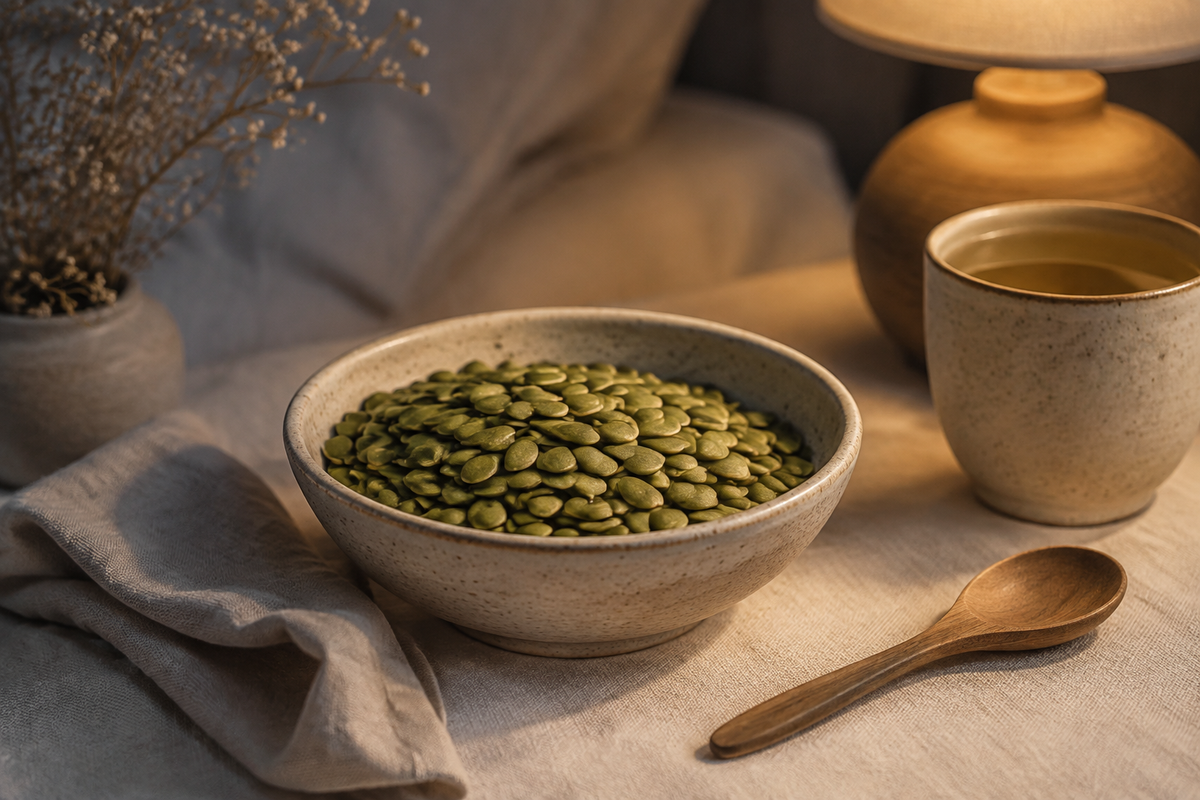
Pumpkin seeds contain magnesium and the amino acid tryptophan, two nutrients often mentioned in conversations about sleep. Magnesium contributes to normal nerve and muscle function, while tryptophan is used by the body in pathways that produce serotonin and melatonin. That biological connection is real—but it does not mean a handful of pumpkin seeds works like a sleeping pill or treats insomnia.
The more useful question is: how can pumpkin seeds fit into an evening routine and a balanced diet? To answer that properly, we need to separate three things: the nutrients present in the food, what those nutrients normally do in the body, and what clinical research has actually shown about sleep.
Why pumpkin seeds are linked with sleep
The association usually comes from their magnesium and tryptophan content. Pumpkin seeds also provide protein and fats, which can make a small snack feel more substantial. None of these features guarantees better sleep, but they explain why the seeds appear in many bedtime-snack lists.
A USDA reference entry for roasted, unsalted pumpkin and squash seed kernels lists about 550 mg magnesium and 0.576 g tryptophan per 100 g. A practical 30 g portion would work out to approximately 165 mg magnesium and 173 mg tryptophan. These are reference values rather than a laboratory analysis of every product; variety, roasting, moisture and serving size can change the actual numbers.
What magnesium does
Magnesium is an essential mineral involved in hundreds of enzyme systems. The US National Institutes of Health lists roles in normal muscle and nerve function, energy production, blood glucose and blood pressure regulation, and the formation of protein, bone and DNA.
Because magnesium participates in nervous-system and muscle processes, it is often marketed as a sleep nutrient. However, a role in normal physiology is not the same as proof that extra magnesium makes everyone sleep better. Research on magnesium supplements and sleep has been mixed, particularly in people who are not deficient.
Food magnesium and magnesium supplements are not interchangeable
A serving of pumpkin seeds contributes magnesium as part of food, alongside protein, fats and other minerals. A supplement delivers a concentrated dose and may interact with medicines or cause digestive effects. If a clinician has diagnosed a deficiency or recommended a particular dose, a general food article should not replace that advice.
What tryptophan does
Tryptophan is an essential amino acid, meaning the body must obtain it from food. It is used to make proteins and is also a precursor in the pathway that produces serotonin and melatonin. Melatonin helps regulate the timing of the sleep-wake cycle.
The pathway is more complicated than “eat tryptophan, make melatonin, fall asleep.” Tryptophan competes with other amino acids for transport into the brain. The rest of the meal, the amount consumed, individual metabolism and the timing all matter.
What does the research say?
A systematic review and meta-analysis of tryptophan supplementation found an improvement in wakefulness after sleep onset, particularly at supplemental intakes of at least 1 g per day, but it did not find improvements across every sleep measure. That evidence concerns measured tryptophan supplementation—not ordinary portions of pumpkin seeds.
Using the USDA reference value above, a 30 g serving of roasted kernels contains far less than 1 g tryptophan. It would therefore be misleading to apply supplement-trial results directly to a handful of seeds. Pumpkin seeds are a nutritious food; they are not a clinically tested insomnia treatment.
Can pumpkin seeds help you sleep?
They can be part of a sensible evening snack, especially if they replace a very salty, sugary or heavily fried option. Their magnesium and tryptophan contribute to normal nutrition. But there is not enough evidence to promise that a routine serving will make you fall asleep faster, prevent waking or cure poor sleep.
Sleep is affected by light exposure, caffeine, alcohol, stress, illness, medicines, noise, temperature, exercise, meal timing and a regular sleep schedule. A food can support the overall routine, but it cannot carry all of those factors.
How to build a practical evening snack
Keep the portion moderate and the preparation simple. Pumpkin seeds are energy-dense, and a very large or spicy snack close to bedtime may feel uncomfortable.
Option 1: Pumpkin seeds with fruit
Pair 1 to 2 tablespoons of unsalted pumpkin seeds with a small banana, apple or guava. The fruit adds carbohydrate and volume while the seeds add protein, fats and minerals.
Option 2: Curd bowl
Add 1 tablespoon of pumpkin seeds to plain curd with a pinch of cinnamon or cardamom. If you prefer savoury flavours, use roasted cumin and a little grated cucumber.
Option 3: Warm oats
Top a small bowl of oats with 1 tablespoon of seeds and chopped fruit. Avoid turning it into a heavy dessert if you are eating close to bedtime.
Option 4: Simple seed-and-makhana mix
Combine roasted makhana with pumpkin seeds and a light seasoning. Choose an unsalted or lightly salted version if sodium is a concern.
For more meal ideas, see five ways to add pumpkin seeds to Indian meals.
When should you eat pumpkin seeds?
There is no proven universal “best time.” If you enjoy them in the evening, try a small portion one to two hours before bed and notice how you feel. If late eating causes reflux, heaviness or discomfort, move the snack earlier or include the seeds at breakfast or lunch instead.
Consistency in the broader sleep routine is more important than hitting a precise seed-eating window. Keep caffeine away from late evening, dim bright lights, and aim for a regular bedtime and wake time.
Raw or roasted for an evening snack?
Either can fit. Raw kernels are softer and milder. Roasted kernels are crisper and often easier to enjoy on their own. The biggest practical difference may be added salt, oil and flavouring rather than roasting itself. Check the ingredient list and choose the version that suits your needs.
Our detailed comparison of raw versus roasted pumpkin seeds explains how heat changes flavour, moisture, texture and storage.
Who should be cautious?
- Anyone with a known seed allergy should avoid pumpkin seeds unless cleared by a qualified clinician.
- Whole kernels can be a choking risk for young children; use an age-appropriate ground texture.
- People following a medically prescribed low-mineral, low-sodium or energy-controlled diet should use their clinician’s guidance.
- Persistent insomnia, loud snoring, breathing pauses, severe daytime sleepiness or sudden sleep changes deserve medical attention rather than food experimentation alone.
Frequently asked questions
How many pumpkin seeds should I eat before bed?
There is no clinically established bedtime dose of pumpkin seeds. A practical food portion is 1 to 2 tablespoons or a small handful, considered within the rest of your diet and energy needs.
Are pumpkin seeds a natural source of melatonin?
The stronger reason they are discussed in sleep nutrition is their tryptophan and magnesium content. Tryptophan participates in the pathway used to make melatonin, but eating tryptophan does not automatically produce a predictable sedative effect.
Is magnesium from pumpkin seeds enough for sleep?
Pumpkin seeds can contribute meaningfully to magnesium intake, but sleep problems cannot be diagnosed or treated from one nutrient alone. Include a range of magnesium-containing foods such as dals, beans, whole grains, leafy vegetables, nuts and seeds.
Will pumpkin seeds cure insomnia?
No. They are food, not an insomnia treatment. If poor sleep lasts for weeks, affects daytime function or comes with breathing symptoms, speak with a qualified healthcare professional.
Reference sources
- NIH Office of Dietary Supplements: Magnesium fact sheet
- Systematic review and meta-analysis of tryptophan supplementation and sleep quality
- USDA nutrient reference for nut and seed products
This article provides general nutrition information and is not medical advice.
Explore the ingredient: Pumpkin Seed Kernels


