

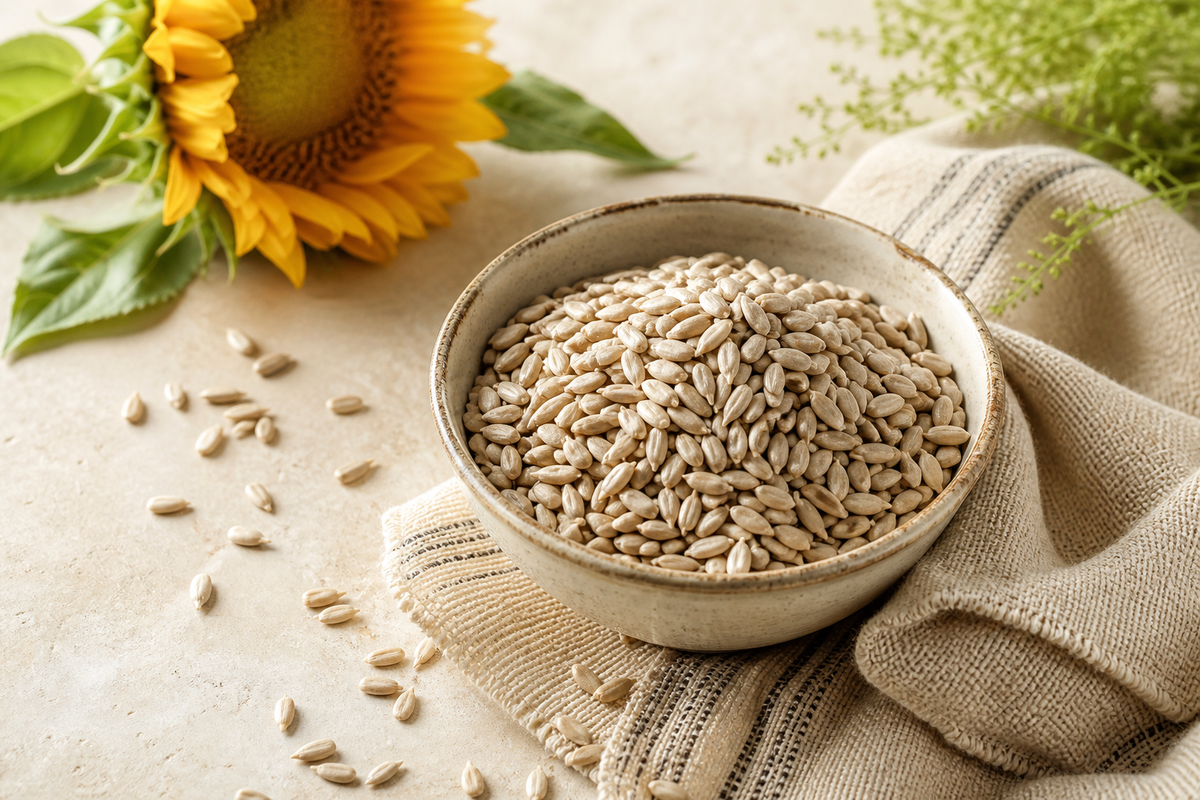
Sunflower seed kernels are one of the most concentrated everyday food sources of vitamin E. A small handful provides a meaningful amount of this fat-soluble antioxidant, along with unsaturated fats, protein and other nutrients. Their vitamin E is naturally present in the seed; it is not something that must be added through fortification.
That makes sunflower seeds useful—but not magical. Vitamin E performs essential jobs in the body, yet eating one vitamin-E-rich food cannot prevent or treat disease on its own. The best way to use sunflower kernels is as part of a varied diet built around vegetables, fruits, pulses, grains and different nuts or seeds.
How much vitamin E is in sunflower seeds?
The US National Institutes of Health lists 7.4 mg of vitamin E in one ounce, or about 28 g, of dry-roasted sunflower seeds. That is approximately 49% of the US Daily Value for adults. Exact values vary with the seed variety, processing, storage and serving size, so use your pack’s nutrition label when you need a product-specific number.
A practical serving is a small handful or 1 to 2 tablespoons when used as a topping. The point is not to eat 100 g at once. Like most seeds, sunflower kernels are nutrient-dense and energy-dense.
What is vitamin E?
Vitamin E is the collective name for a group of fat-soluble compounds. Alpha-tocopherol is the form the human body preferentially maintains and uses to meet vitamin E requirements.
According to the NIH Office of Dietary Supplements, vitamin E acts as an antioxidant, helping protect cells from damage caused by free radicals. It also contributes to normal immune function, cell signalling and other metabolic processes.
What does “antioxidant” actually mean?
Normal metabolism and environmental exposures can produce reactive molecules commonly described as free radicals. Antioxidant systems help manage these molecules. Vitamin E is especially relevant in fatty parts of cells because it is fat-soluble.
This does not mean more vitamin E always creates more protection. Nutrition works through balance, and high-dose supplements behave differently from vitamin E in food. Claims that a seed “detoxes” the body or guarantees protection from ageing or disease go beyond the evidence.
Why do sunflower seeds contain so much vitamin E?
A seed stores energy, mostly as oil, for the future plant. Unsaturated fats are vulnerable to oxidation, so antioxidant compounds help protect the seed’s oil during storage and germination. Vitamin E is part of that natural protective system.
Sunflower kernels are particularly oil-rich, and their tocopherol profile is one reason they stand out among common nuts and seeds. Sunflower oil is also known as a vitamin E source, but whole kernels additionally provide protein, fibre and minerals.
Vitamin E is absorbed with fat
Because vitamin E is fat-soluble, dietary fat helps the body absorb it. Sunflower seeds naturally contain fat alongside vitamin E, so the nutrient arrives in a food matrix suited to absorption. You do not need to add a large amount of extra oil to obtain that benefit.
Add the kernels to a meal that already includes vegetables, dal, curd, grains or fruit. The seeds can provide richness and texture while the other foods bring vitamin C, folate, carbohydrate, fibre and different minerals.
How sunflower seeds compare with other vitamin E foods
Sunflower seeds are not the only source. Almonds, peanuts, hazelnuts, wheat-germ oil, sunflower oil, safflower oil and some green vegetables also contribute. The NIH lists dry-roasted almonds at 6.8 mg vitamin E per ounce and dry-roasted sunflower seeds at 7.4 mg per ounce.
There is no need to choose one winner. Rotate foods so your diet does not depend on a single ingredient. Sunflower seeds can be convenient on days when you want a nut-free-style seed option, though people can still have seed allergies.
Five easy ways to eat a practical portion
- Breakfast: sprinkle 1 tablespoon over oats, poha, upma or curd.
- Salad: add 1 to 2 tablespoons just before serving for crunch.
- Roti: mix 1 tablespoon of coarsely ground kernels into each cup of atta.
- Chutney: replace part of the peanut, coconut or roasted chana with sunflower kernels.
- Snack mix: combine a measured portion with roasted chana, makhana or unsweetened coconut.
Continue with five everyday ways to use sunflower seed kernels for quantities and preparation tips.
Does roasting destroy vitamin E?
Vitamin E can be affected by heat, oxygen, light and storage time. The degree of change depends on temperature, duration and how the seeds are handled afterward. A short, gentle roast is very different from prolonged high-heat cooking or repeatedly reheating a batch.
Roasting also removes some moisture, which can make nutrient comparisons per 100 g confusing. For everyday cooking, focus on avoiding scorching and storing the seeds well. See our full comparison of raw versus roasted sunflower seeds.
Storage matters for vitamin E and flavour
Sunflower kernels contain delicate oils. Heat, light, moisture and air can produce a stale, paint-like or bitter flavour. Store the opened pack in an airtight container away from the stove. Refrigeration is useful in hot or humid weather.
Let home-roasted seeds cool completely before sealing. Trapped steam softens the kernels and introduces moisture. Make small batches that you can finish while the flavour is fresh.
Food vitamin E versus supplements
Eating sunflower seeds is not the same as taking a high-dose vitamin E capsule. Supplements can deliver many times the daily requirement and may interact with blood-thinning medicines or medical treatments. If a doctor has diagnosed a deficiency or recommended a dose, follow that individual advice rather than calculating treatment from a food table.
Frequently asked questions
Are sunflower seeds the best natural source of vitamin E?
They are among the richer common food sources, but “best” depends on portion, preparation and the rest of the diet. Oils may provide more vitamin E per spoon, while whole kernels bring protein and texture as well.
How many sunflower seeds should I eat for vitamin E?
There is no required number of seeds. A small handful or measured 28 g serving provides a substantial contribution in standard food-composition data. Include other vitamin E foods across the week.
Do sunflower seeds improve skin or hair?
Vitamin E supports normal cellular functions, but a serving of sunflower seeds cannot guarantee a cosmetic result or treat a skin or hair condition. Overall diet, health, genetics and care practices all matter.
Can sunflower seeds replace a vitamin E supplement?
They can contribute vitamin E as food, but they should not be used to replace a supplement prescribed for a medical reason without speaking to the clinician who recommended it.
Are salted sunflower seeds still nutritious?
They still contain nutrients, but added salt changes the sodium content. Choose plain or lightly salted kernels when you want more control over the whole meal.
Reference sources
- NIH Office of Dietary Supplements: Vitamin E fact sheet
- NIH vitamin E reference values and food sources
- ICMR–National Institute of Nutrition: Dietary Guidelines for Indians
This article provides general nutrition information and is not medical advice.
Explore the ingredient: Sunflower Seed Kernels


