

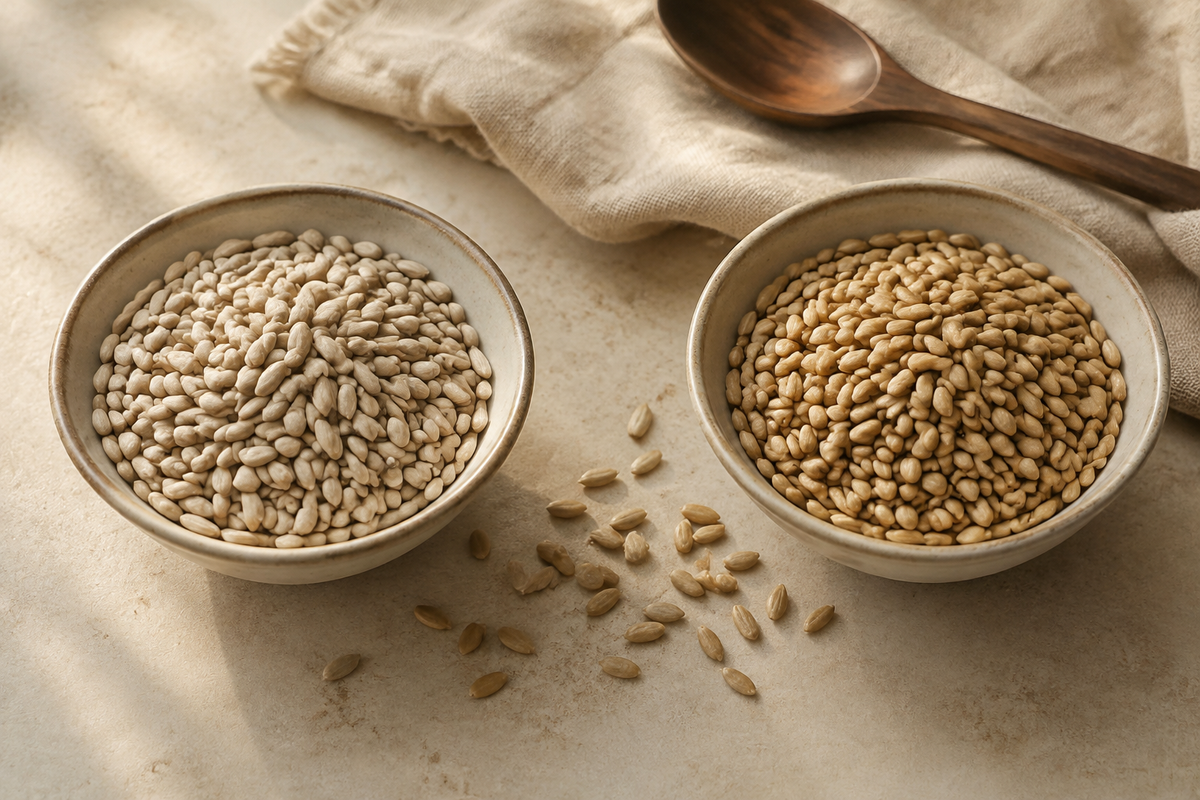
Raw and roasted sunflower seed kernels are the same ingredient with different flavour, texture and moisture. Raw kernels are softer and mildly grassy. Roasting makes them crisp, aromatic and more snackable. Both provide protein, fats, vitamin E and minerals, but the exact numbers can change with processing and storage.
The better choice depends on what you are making. Raw kernels suit pastes, batters and recipes that will cook later. Roasted kernels suit salads, poha, trail mix and direct snacking.
Make sure you are comparing the same seed form
Sunflower seeds are sold in two main forms:
- Whole in-shell seeds: the kernel is enclosed in a striped black-and-white shell that is removed before eating.
- Hulled kernels: the edible inner seed, ready to cook or eat.
Shell weight changes serving comparisons. This guide focuses on hulled kernels.
Raw versus roasted at a glance
| Feature | Raw kernels | Roasted kernels |
|---|---|---|
| Flavour | Mild and slightly grassy | Nutty and toasted |
| Texture | Soft crunch | Crisp and brittle |
| Best uses | Chutney, paste, batter, baking | Snacks, salads, toppings, trail mix |
| Added ingredients | Usually none | May contain salt, oil or seasoning |
| Main risk | Stale oils or unsuitable storage | Scorching, excess salt or oil |
What happens to vitamin E?
Vitamin E is sensitive to heat, light and oxygen. Some loss can occur during roasting and storage, with the amount depending on temperature, duration and exposure to air. A short, gentle roast is less aggressive than prolonged high heat.
Even so, dry-roasted sunflower seeds remain a rich food source. The NIH lists 7.4 mg vitamin E in a one-ounce serving of dry-roasted kernels. That is about 49% of the US Daily Value.
Do not assume raw always contains one fixed percentage more. Varieties, harvests and testing methods differ. Use the product label for product-specific values.
What happens to protein and minerals?
Normal roasting does not remove all the protein or minerals. Protein may undergo structural and browning changes under heat, while minerals such as magnesium, copper and selenium remain present. Values per 100 g can shift because roasted seeds contain less water.
Heavy browning is unnecessary. Stop when the seeds smell nutty and are lightly coloured.
What happens to the fats?
Sunflower kernels contain a large proportion of unsaturated fat. These fats are useful in a balanced diet but are also sensitive to heat and oxidation. Excessive roasting or long storage in a warm place can create stale flavours.
Dry-roasting adds no oil. Oil-roasting adds the processing oil to the final food. Check the ingredient list because “roasted” does not automatically mean dry-roasted.
Salt can be the biggest practical difference
Plain raw and plain roasted kernels may have similar ingredient lists. Salted or masala-coated versions can contain much more sodium, plus oil, starch, sugar or flavouring. If you use seeds in rotis, salad or sabzi, unsalted kernels give you better control.
Does roasting improve digestion?
Roasting changes texture and can modify some seed compounds, including antinutritional compounds such as phytate. The result depends on the roasting method, and it is not accurate to promise that home roasting removes all phytate or guarantees better mineral absorption.
If raw kernels feel heavy to you, try a smaller portion or a gentle roast. Individual tolerance matters more than a universal rule.
How to roast sunflower kernels at home
Stovetop method
- Warm a heavy pan over low heat.
- Add kernels in a single layer without oil.
- Stir continuously for 3 to 5 minutes.
- Remove as soon as they smell nutty and show light colour.
- Transfer to a cool plate immediately.
- Season after roasting and cool completely before storing.
Oven method
- Heat the oven to approximately 150°C.
- Spread the kernels evenly on a clean tray.
- Roast for 7 to 10 minutes, stirring halfway.
- Check early because small kernels brown quickly and ovens vary.
If the pack already says “roasted,” warm the kernels only briefly if a recipe requires it. Re-roasting can dry or scorch them.
Which form is better for each recipe?
- Salad topping: roasted
- Chutney: raw for mildness, roasted for deeper flavour
- Roti dough: either, but grind first
- Trail mix: roasted
- Granola: raw if baking with the oats; roasted if adding after baking
- Seed butter: lightly roasted for aroma and easier blending
- Smooth sauce: raw or soaked
Try the recipes in sunflower seeds for salads, rotis and trail mixes.
Storage differences
Both forms should be kept airtight, cool and dry. Refrigeration is helpful after opening in hot or humid climates. Ground seeds deteriorate faster because more surface area is exposed.
Always cool roasted seeds before sealing. If you see moisture, mould or insects, or notice an unpleasant paint-like smell or bitter taste, discard the batch.
Does roasting change the calories?
Roasting does not create calories, but removing water can concentrate nutrients and energy per 100 g. Oil-roasted seeds also take up some processing oil. Compare equal edible weights and read the ingredient list rather than assuming every roasted product is identical.
Can you soak sunflower kernels before roasting?
You can, but they need to be dried thoroughly. Wet kernels may steam instead of roast and should not be stored while damp. For an everyday crunchy topping, soaking is unnecessary. Use soaking when a chutney, dressing or seed cream benefits from a softer texture.
A small-batch roasting routine
Roast only one or two weeks’ worth at a time. Keep most of the batch plain, then season individual portions differently: cumin and amchur for sabzi, curry leaves and chilli for a snack, or cinnamon for oats. This protects flexibility and prevents an entire jar from becoming too salty or strongly flavoured.
Frequently asked questions
Are roasted sunflower seeds less nutritious?
They still provide vitamin E, protein, fats and minerals. Heat can change some compounds, while moisture loss changes values by weight. Added salt or oil may be a larger practical difference.
Can I eat raw sunflower kernels?
Yes, when they are sold for direct food use. Follow the label and store them properly.
Why did my seeds turn bitter?
They may have scorched or their natural oils may have become stale. Use low heat and store away from warmth and air.
Which form has more vitamin E?
Raw kernels may retain more under some conditions, but exact differences depend on the product and processing. Dry-roasted sunflower seeds remain a strong vitamin E source in standard reference data.
Are roasted kernels better for snacking?
They are usually crisper and more flavourful. Choose plain or lightly salted versions and measure a practical portion.
For broader nutrition context, see sunflower versus pumpkin seeds and why sunflower kernels are rich in vitamin E.
Reference sources
Explore the ingredient: Sunflower Seed Kernels


