

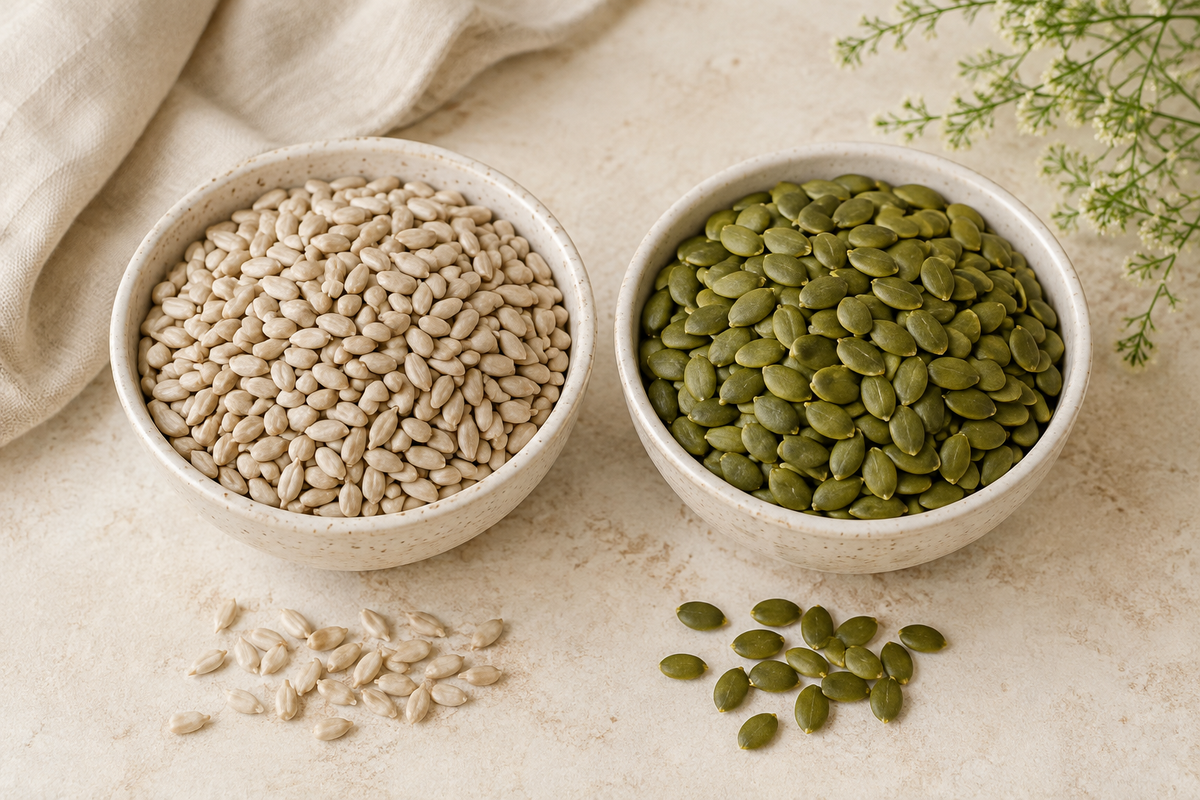
Sunflower and pumpkin seeds are both nutrient-dense kernels, but they do not offer exactly the same strengths. Sunflower seeds stand out for vitamin E. Pumpkin seeds are particularly notable for magnesium and generally provide more protein per equal weight. Their flavours, colours and best kitchen uses also differ.
The useful answer is rarely “which seed is healthier?” A better question is “which one suits this meal, and how can I rotate both?”
Sunflower vs pumpkin seeds at a glance
| Feature | Sunflower kernels | Pumpkin kernels |
|---|---|---|
| Colour | Pale grey or beige | Deep green |
| Flavour | Mild, lightly sweet and nutty | Earthier and more robust |
| Texture | Small and delicate | Larger and firmer |
| Standout nutrient | Vitamin E | Magnesium |
| Protein | Useful contribution | Typically higher per equal weight |
| Best uses | Salads, atta, chutney, light mixes | Snacks, granola, sabzi toppings, seed butter |
Vitamin E: sunflower seeds lead
The NIH lists 7.4 mg vitamin E in one ounce of dry-roasted sunflower seeds—about 49% of the US Daily Value. Pumpkin seeds contain vitamin E too, but standard food-composition references list a much smaller amount.
Vitamin E acts as an antioxidant in the body and supports normal immune and cellular functions. That does not turn sunflower seeds into a disease-prevention treatment. Read why sunflower seeds are naturally rich in vitamin E for a fuller explanation.
Magnesium: pumpkin seeds lead
A USDA reference for roasted, unsalted pumpkin and squash seed kernels lists about 156 mg magnesium per ounce. Sunflower kernels also contribute magnesium, but pumpkin seeds generally provide more for the same weight.
Magnesium supports normal nerve and muscle function, energy production, bone and many enzyme reactions. As with vitamin E, a nutrient’s biological role is not proof that one serving treats a symptom or deficiency.
Protein: both contribute, pumpkin usually provides more
Reference food data puts roasted pumpkin seed kernels at roughly 8 to 9 g protein per ounce, while sunflower kernels commonly provide around 5 to 6 g. Exact values vary by product and serving size.
Neither seed needs to carry an entire daily protein target. Add them to meals that include dal, beans, soy, dairy, eggs, fish or meat according to your eating pattern.
Fat and energy
Both seeds contain substantial fat, much of it unsaturated, and both are energy-dense. A small handful is a practical serving. Eating continuously from a large pouch can turn a topping into a much larger snack than intended.
Added oil, sugar and salt matter. Plain dry-roasted kernels are different from oil-roasted, heavily salted or sweet-coated versions.
Zinc, iron and other minerals
Pumpkin seeds are well known for zinc and iron; sunflower seeds contribute minerals too. The exact ranking changes with the database entry and processing. It is more useful to rotate seed types than to select one based on a single mineral.
Mineral absorption from plant foods is influenced by phytate and the rest of the diet. A number printed in a table is not identical to the amount the body absorbs.
Flavour and texture differences
Sunflower kernels
Small, delicate and mild. They distribute easily through salads, atta and chutney. Their lighter flavour allows herbs and vegetables to remain prominent.
Pumpkin kernels
Larger, firmer and earthier. They make a more visible topping and hold their own in granola, trail mix and bold masala seasonings.
Which is better for Indian meals?
- For green chutney: sunflower for mildness; pumpkin for a deeper seed flavour.
- For roti: finely ground sunflower seeds blend easily; pumpkin seed meal produces a stronger taste and greener flecks.
- For poha or upma: either works; pumpkin gives a firmer crunch.
- For sabzi topping: pumpkin is more visible; sunflower spreads more evenly.
- For curd and fruit: sunflower is delicate; pumpkin makes the bowl more substantial.
- For seed butter: both work; pumpkin butter is greener and earthier.
Can you eat them together?
Yes. A half-and-half mixture gives complementary flavour and nutrient profiles. Combine equal parts sunflower and pumpkin kernels, roast gently and season after cooking. Use 1 tablespoon over each serving of salad, dal, sabzi or curd.
For trail mix, combine both seeds with roasted chana or makhana for volume. Add only a modest amount of dried fruit or jaggery if you want sweetness.
Raw versus roasted
Raw kernels are softer and useful for blending. Roasted kernels taste nuttier and are better for snacking. Roasting changes moisture and some heat-sensitive compounds, while minerals and protein remain present. Salt and oil can create larger practical differences than roasting alone.
Compare equivalent forms: hulled kernel with hulled kernel, not a whole seed with shell against a shelled seed.
How to choose between them
- Choose sunflower seeds when vitamin E is your specific food focus.
- Choose pumpkin seeds when you want more magnesium or protein per equal weight.
- Choose by flavour when both fit the meal.
- Choose plain versions when you need control over salt, oil and sugar.
- Choose both when variety is the goal.
A practical weekly rotation
You do not need both seeds every day. A rotation can be as simple as sunflower kernels in Monday’s salad, pumpkin seeds over Wednesday’s sabzi and a half-and-half trail mix at the weekend. This makes flavour less repetitive and spreads attention across different nutrients.
If a recipe uses a large amount of another nut or seed, do not add both simply for the sake of variety. Variety works across meals and days, not only inside one bowl.
Comparing portions fairly
Compare the same edible weight. A tablespoon of small sunflower kernels can hold a different weight from a tablespoon of larger pumpkin kernels. Brand serving sizes also vary. For a fair nutrient comparison, use grams and check whether the product is raw, dry-roasted, oil-roasted or salted.
Price comparisons should use edible kernels too. Whole in-shell seeds may look cheaper by pack weight, but part of that weight is discarded shell.
Can one replace the other in recipes?
Usually, but expect a texture change. Replace by weight rather than volume. In chutney and atta, sunflower kernels blend more quietly. In granola and sabzi toppings, pumpkin kernels remain more visible. If substituting in seed butter, the finished colour and thickness will differ, so add liquid or oil only after blending for several minutes.
Frequently asked questions
Are sunflower seeds healthier than pumpkin seeds?
No single answer applies. Sunflower seeds provide more vitamin E, while pumpkin seeds generally provide more magnesium and protein. Both can fit a balanced diet.
Which has more protein?
Pumpkin seed kernels typically contain more protein per equal weight in standard reference data.
Which is better for weight loss?
Neither seed causes weight loss by itself. Both are energy-dense. Portion size, the foods they replace and the overall eating pattern matter more.
Which is better for vitamin E?
Sunflower kernels are the stronger vitamin E source in common food-composition references.
Can I alternate them daily?
Yes, if you tolerate both. Rotation is an easy way to vary flavour and nutrients without forcing both into every meal.
Reference sources
- NIH Office of Dietary Supplements: Vitamin E
- NIH Office of Dietary Supplements: Magnesium
- USDA nutrient reference for nut and seed products
Food-composition values are references, not batch-specific laboratory results. This article is general nutrition information, not medical advice.
Explore the ingredient: Sunflower Seed Kernels · Pumpkin Seed Kernels


