

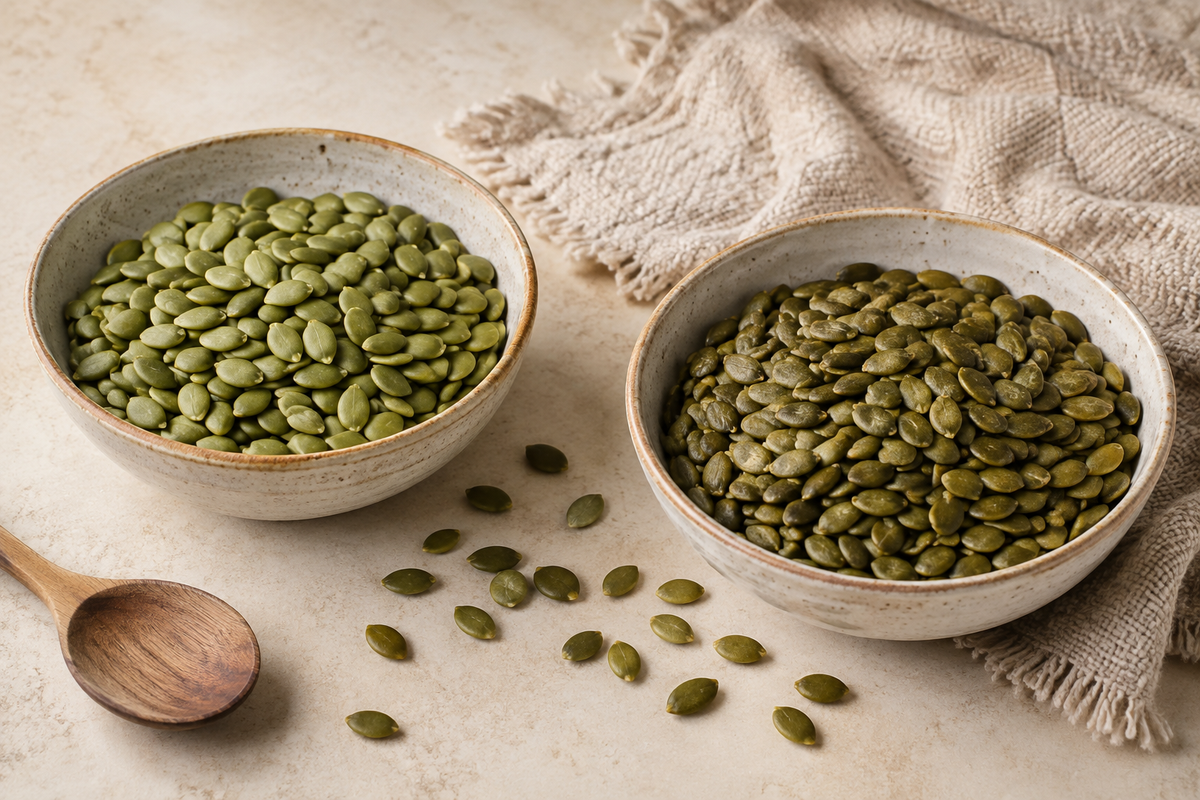
Roasting changes pumpkin seeds most noticeably in flavour, texture and moisture. Raw kernels are softer, green and mildly grassy. Roasted kernels are crisper and more aromatic. Protein and minerals remain present in both, but heat, moisture loss, added oil and salt can change the numbers printed per 100 g and the way the seeds fit into a meal.
Neither form is automatically “better.” The right choice depends on whether you want a snack, a crunchy topping, a smooth paste or a seed that will cook inside another dish.
First, check whether the seeds are hulled
Many comparisons accidentally mix two different products:
- Hulled kernels: the green edible centre, often called pepitas.
- Whole seeds: the kernel still enclosed in a pale, fibrous shell.
The shell changes weight, fibre, texture and serving size. Compare raw and roasted versions of the same form whenever possible. The recipes in this article use hulled kernels.
Raw versus roasted at a glance
| Feature | Raw kernels | Roasted kernels |
|---|---|---|
| Flavour | Mild, fresh, slightly grassy | Deeper, nutty, toasted |
| Texture | Soft crunch | Crisp and brittle |
| Best uses | Pastes, smoothies, sauces, batters | Snacks, toppings, granola, chaat |
| Added ingredients | Usually none | May include salt, oil or seasoning |
| Storage risk | Natural oils can become rancid | Heat exposure and seasonings also affect shelf life |
What happens to protein?
Ordinary roasting does not remove all the protein from pumpkin seeds. USDA reference entries for dried kernels and roasted kernels both show roughly 30 g protein per 100 g. Exact values differ because the samples, varieties and moisture levels differ.
Very high heat or prolonged roasting can alter proteins and amino acids through browning reactions. In the home kitchen, the practical lesson is simple: use moderate heat and stop when the seeds smell nutty. Dark brown or burnt seeds are not “extra roasted”; they are overcooked.
What happens to magnesium, zinc and iron?
Minerals are not destroyed by normal cooking heat in the same way that some heat-sensitive vitamins are. Pumpkin seeds remain a source of magnesium, zinc and iron after roasting. However, values per 100 g can shift because roasting removes moisture and because different database entries may represent different seed varieties or preparation methods.
Do not interpret a small database difference as proof that roasting always increases or decreases a mineral by the same percentage. For product-specific numbers, use the nutrition label.
What happens to fats?
Pumpkin seeds naturally contain a substantial amount of fat, including unsaturated fats. Heat creates the roasted aroma people enjoy, but excessive heat and long exposure to air can encourage oxidation. That is why gentle roasting, complete cooling and airtight storage matter.
Oil-roasted seeds also include the oil used in processing. The amount and type of added oil may not be obvious from appearance alone, so check the ingredient list.
What happens to antinutritional compounds?
Seeds contain compounds such as phytate that can reduce the absorption of some minerals. Roasting may lower some antinutritional compounds, but the change depends on temperature, duration, seed type and other processing. It is not accurate to claim that a brief home roast removes all phytate or guarantees better mineral absorption.
Dietary variety matters more than trying to engineer a perfect seed. Rotate pumpkin seeds with dals, beans, vegetables, whole grains, dairy or alternatives, and other nuts and seeds.
Salt often matters more than roasting
A plain roasted seed and a heavily salted roasted seed are nutritionally different products. If you monitor sodium, compare labels rather than judging by the word “roasted.” Masala coatings can also include sugar, starch, flavour enhancers and extra oil.
Choose unsalted seeds when you want full control in recipes. Add salt at the dish level, where a smaller amount can season the whole meal.
Does roasting change the calories?
Roasting does not create energy from nothing. However, it removes water, so the roasted food can become slightly more concentrated by weight. Oil-roasting adds energy from the oil. That is why comparing “100 g raw” with “100 g oil-roasted” can make the change look larger than the experience of eating the same small handful.
For a fair label comparison, check the serving weight, not just the calories per serving. One brand may call 15 g a serving while another uses 30 g. Also confirm whether the listing refers to kernels or whole seeds with shells.
Can you soak pumpkin seeds before roasting?
You can, but they must be dried thoroughly before storage. Wet seeds placed directly into a low-temperature pan may steam and soften before they roast. If you soak them for a recipe, drain well, pat dry and roast only the amount you plan to use soon. For a simple crunchy snack, soaking is optional and adds extra drying time.
Which tastes better?
For direct snacking, most people prefer roasted kernels because the flavour is fuller and the texture crisper. Raw kernels are better when you want the ingredient to blend into a chutney, smoothie, dressing or seed butter without a strong toasted note.
For Indian meals, roasted seeds work well over poha, upma, sabzi, dal and curd rice. Raw seeds can be soaked and ground into a gravy or chutney base. Explore five easy ways to use pumpkin seeds in Indian meals.
How to roast pumpkin seeds gently at home
Stovetop method
- Place a heavy pan over low heat.
- Add the hulled kernels in a single layer without oil.
- Stir almost continuously for 3 to 5 minutes.
- Remove when they smell nutty and begin to make soft popping sounds.
- Transfer immediately to a cool plate.
- Season after roasting and cool completely before storing.
Oven method
- Heat the oven to about 150°C.
- Spread the kernels in one layer on a clean tray.
- Roast for 8 to 12 minutes, stirring once halfway.
- Check early because small kernels brown quickly and ovens vary.
If your seeds are already labelled roasted, do not roast them again unless a recipe specifically needs extra colour. Reheating can dry them out or create bitterness.
Which is better for different recipes?
- For snacking: roasted, plain or lightly seasoned
- For granola: raw if the granola will bake; roasted if stirring in after baking
- For chutney: raw for a mild paste, roasted for stronger flavour
- For sabzi topping: roasted
- For smoothies: raw or soaked
- For seed butter: lightly roasted for easier blending and fuller aroma
Storage differences
Both raw and roasted seeds should be protected from heat, light, moisture and air. Keep them airtight. Refrigeration is helpful in hot or humid climates, especially after opening.
Home-roasted seeds must cool fully before going into a jar. If sealed while warm, condensation can soften them and shorten storage life. Make small batches that you can use within a few weeks.
Frequently asked questions
Are roasted pumpkin seeds less nutritious?
Not in a simple yes-or-no way. They still provide protein and minerals. Roasting changes moisture, flavour and some compounds; added salt or oil may make a bigger practical difference than the heat itself.
Can I eat raw pumpkin seed kernels?
Yes, when the product is sold for direct food use. Follow the label and store it properly. Raw kernels are particularly useful for blending and cooking.
Why are my roasted seeds bitter?
They may have been scorched or the natural oils may have become stale. Fresh pumpkin seeds should taste nutty, not harsh, paint-like or unpleasantly bitter.
Do roasted seeds have more protein?
Roasting can reduce moisture, which changes nutrient concentration by weight, but it does not magically create protein. Compare equivalent serving sizes and the same seed form.
Which version is better for sleep?
There is no evidence that choosing raw instead of roasted pumpkin seeds reliably changes sleep. The portion, added salt and the rest of the evening routine are more useful considerations. Read our evidence-based guide to pumpkin seeds, magnesium, tryptophan and sleep.
Reference sources
- USDA nutrient reference for raw and roasted nut and seed products
- NIH Office of Dietary Supplements: Magnesium fact sheet
Explore the ingredient: Pumpkin Seed Kernels


