

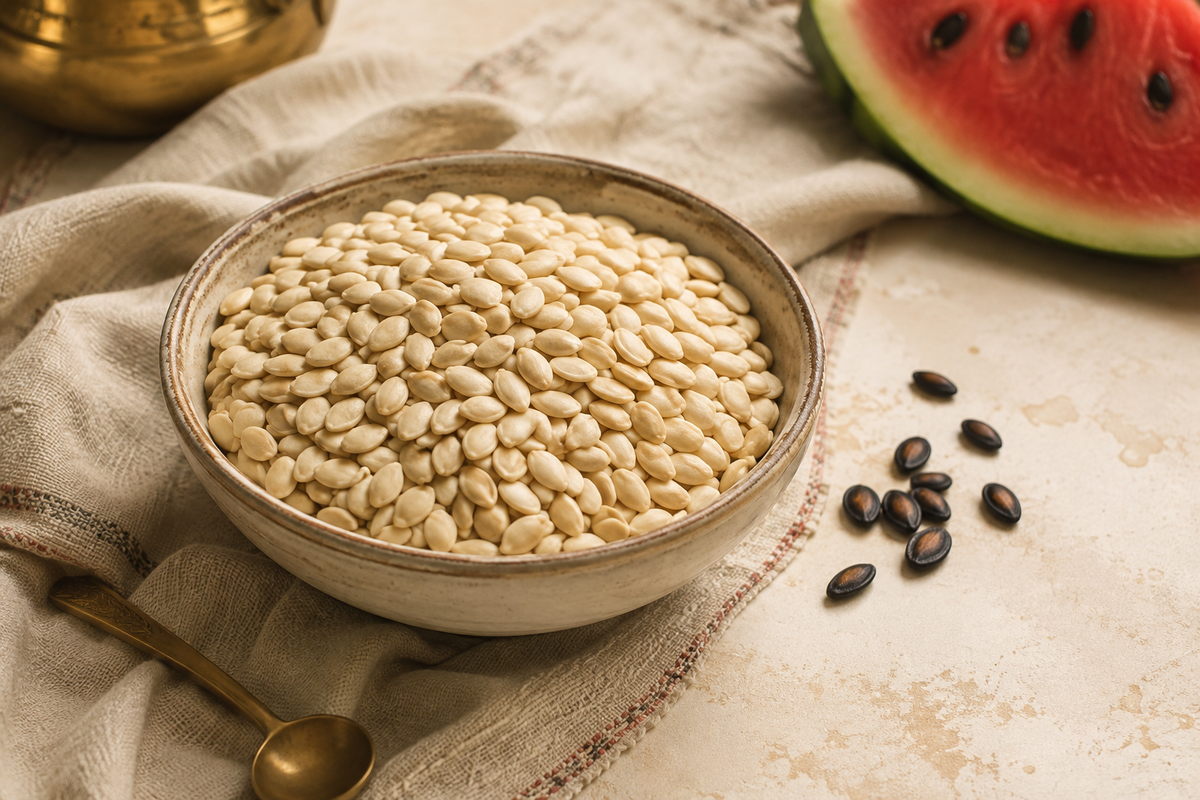
Magaz is the soft, pale kernel found inside a watermelon seed. In Indian kitchens, these shelled kernels are valued for their mild, nutty flavour and their ability to add creaminess without dominating a dish. They can be toasted and eaten as they are, ground into a paste for gravies and chutneys, or blended into sweets and cooling drinks.
The word can be confusing because its meaning changes with context. A dry-fruit seller may use magaz for watermelon seed kernels, while a recipe may mention char magaz, a blend of several melon and gourd seeds. If a recipe simply says “magaz,” check whether it asks for white, shelled kernels or a four-seed mixture. For the uses in this guide, magaz means dried, shelled watermelon seed kernels.
Magaz, watermelon seeds and char magaz: what is the difference?
Whole watermelon seeds
These are the seeds as they come from the fruit, with the dark or mottled outer shell still attached. The shell is firm and the kernel inside is small. Whole seeds may be washed, dried and roasted, but they are different from the ready-to-use white kernels sold for cooking.
Watermelon seed kernels, or magaz
Magaz has already been shelled. The edible kernel is ivory to pale cream, with a delicate crunch when dry and a soft, creamy texture after soaking. Because the shell has been removed, the kernels blend smoothly and are easy to stir into both sweet and savoury recipes.
Char magaz
Char means four. Char magaz usually refers to a traditional combination of four types of seed kernels, often drawn from watermelon, muskmelon, cucumber and pumpkin or another gourd. The exact mixture varies by region and seller. It is not automatically the same as pure watermelon seed kernels, so read the ingredient list when a recipe depends on a particular flavour or texture.
Why Indian cooks keep magaz in the pantry
Magaz is useful because it is quiet. Almonds bring a recognisable almond flavour and cashews can make a sauce noticeably rich. Watermelon seed kernels sit more gently in the background. They thicken, soften and round out a recipe while allowing spices, milk, herbs or vegetables to remain the main character.
The kernels also change texture according to preparation:
- Raw: tender-crisp, mild and lightly nutty.
- Dry-roasted: crisper, warmer and more aromatic.
- Soaked: soft enough to blend into a smooth paste.
- Ground: useful for thickening milk, gravies and chutneys.
This versatility made magaz practical in kitchens where one ingredient needed to move easily between festive sweets, everyday sauces and summer drinks.
Traditional culinary uses of magaz
1. Kheer, halwa and other sweets
Watermelon seed kernels are used whole, chopped or ground in milk-based desserts. A small handful can be toasted in ghee and folded into kheer for a gentle bite. A soaked paste can also be cooked into the milk, where it adds body and a rounded, creamy finish. In halwa, laddoo and festive mixtures, magaz may be combined with coconut, makhana, almonds, pistachios, sesame or edible gum.
The kernels are especially useful when you want richness without turning the entire sweet into an almond- or cashew-flavoured dish. For a complete method, see how to use magaz in kheer, thandai and chutneys.
2. Thandai and summer drinks
Soaked magaz blends well with milk, fennel, cardamom, black pepper, rose and other thandai ingredients. It helps give the drink a fuller texture and carries the flavour of the spices. Some family recipes use it alone; others place it within a larger char magaz blend.
Because the kernel is mild, it also works in lassi, nut-and-seed milk, breakfast shakes and lightly sweetened coolers. Soaking before blending produces a finer texture and reduces the need for long blending.
3. Mughlai-style gravies and seed pastes
Ground magaz can act as a thickener in rich North Indian gravies. The kernels are soaked, blended and added after the aromatics have cooked. The paste softens sharp edges in a sauce and helps create a smooth texture. It can be used alone or alongside onion, coconut, poppy seeds or nuts, depending on the recipe.
Add the paste over low to medium heat and stir steadily. Like other seed and nut pastes, it can catch at the bottom of a hot pan. Cook until the raw, watery smell disappears before adding more liquid.
4. Chutneys
Toasted watermelon seed kernels make a surprisingly adaptable chutney base. Blend them with coriander and mint for a green chutney, with dried red chilli and tamarind for a deeper savoury version, or with curd, cumin and green chilli for a cooling accompaniment. Their natural richness balances sour and spicy ingredients without requiring a large amount of oil.
5. Garnishes, fillings and snack mixtures
A light roasting turns magaz into an easy garnish for poha, upma, salads, soups and vegetable dishes. The kernels also appear in dry-fruit fillings for gujiya, modak and stuffed breads. In modern kitchens, the same idea extends naturally to granola, trail mix, yoghurt bowls and roasted makhana mixes.
How to prepare magaz before cooking
There is no single preparation method for every recipe. Use the result you want as your guide.
- For crunch: dry-roast on low heat for 2 to 4 minutes, stirring often. Remove as soon as the kernels smell nutty and show a few pale-gold spots.
- For a smooth paste: soak in warm water for 20 to 30 minutes, drain, then blend with only as much fresh water or milk as needed.
- For kheer: use some kernels whole for texture and grind the rest for creaminess.
- For thandai: soak with the other nuts and spices, then blend very finely and strain only if you prefer a lighter drink.
- For chutney: roast first for a deeper flavour, then cool completely before grinding.
Keep the heat gentle. Small kernels can move from fragrant to bitter quickly, and heavy browning can overwhelm their naturally subtle taste.
What does magaz taste like?
Expect a mild, clean nuttiness rather than the sweetness of cashew or the pronounced flavour of sesame. Raw kernels are delicate. Roasting makes them toastier and slightly more savoury. When soaked and blended, they become creamy with very little graininess, especially in a powerful blender.
This neutral profile is one reason magaz works in recipes as different as kheer and coriander chutney. It adds structure more than a loud new flavour.
How much should you use?
For everyday use, begin with 1 to 2 tablespoons per person and adjust to the dish. A spoonful is enough to finish a breakfast bowl or salad. A family-sized gravy or chutney may use 3 to 6 tablespoons. Rich sweets and thandai recipes may use more because the kernels are part of the recipe’s base rather than only a garnish.
Magaz is energy-dense, like most nuts and seeds. A modest portion is usually enough to add flavour, texture and nutrients while leaving room for the grains, dals, vegetables, fruit and other foods that make a balanced diet.
How to choose and store watermelon seed kernels
Choose kernels that look dry and clean, with a fresh, mild smell. Avoid packs with visible moisture, clumping, dark patches or a paint-like, stale aroma. A few colour variations are normal, but the kernels should not taste bitter.
After opening, move magaz to a clean airtight container. Store it in a cool, dry cupboard if you use it regularly. In hot or humid weather, refrigeration helps protect the natural oils from turning rancid. Always use a dry spoon and close the container promptly.
Is magaz only for traditional recipes?
Not at all. Traditional methods show what the ingredient can do; they do not limit it. The same kernels can be folded into overnight oats, blended into a dip, sprinkled over fruit, added to atta, or crushed over roasted vegetables. If you need practical inspiration, start with these five easy ways to use watermelon seeds every day.
Frequently asked questions
Is magaz the same as melon seeds?
Sometimes sellers use “melon seeds” as a broad market name, but the terms are not always precise. Watermelon seed kernels come from Citrullus lanatus. Muskmelon and other melon kernels are different ingredients. Check the botanical name or ingredient declaration if you need pure watermelon kernels.
Do I need to soak magaz?
No. Soaking is useful when you want a smooth paste or drink. For garnishing, snacking or a coarse chutney, dry-roasting is usually more appropriate.
Can I replace cashews with magaz?
In many gravies, chutneys and milk-based desserts, yes. The result will be lighter in flavour and may be slightly less sweet. Start with an equal quantity by weight, then adjust the liquid because different ingredients thicken differently.
Can magaz be eaten every day?
Watermelon seed kernels can be part of an everyday diet for most people who tolerate seeds. Use a practical portion and vary your food sources. Anyone with a seed allergy, a medically prescribed diet or individual nutrition concerns should follow advice from a qualified clinician or dietitian.
Next: Explore what magnesium and zinc do in a balanced diet, or go straight to our three detailed magaz recipes.
Explore the ingredient: Watermelon Seed Kernels (Magaz)


